Expansion of Empires
Every lesson in this unit has its own card. Select a card to flip it, read what the lesson is about, then open the lesson when you are ready.

Lesson Card Summaries
Hover over a card to light it up. Select it to flip the card for the lesson summary.
 LESSON 4.1
The World Turns West
Select for SummaryThe World Turns West
Unit Launch, Framing the Age of ExplorationFor centuries, the Silk Road carried goods, ideas, and disease across Eurasia by land. Then, in 1453, the Ottomans took Constantinople, and Europe's overland route to the riches of Asia closed. What happened next reshaped the entire planet. Welcome to Unit 4.
Header landmark: Padrão dos Descobrimentos (Monument to the Discoveries) — Lisbon
 LESSON 4.2
Tools of an Ocean Age
Select for SummaryTools of an Ocean Age
Technology and Innovation in the Age of ExplorationNo single European invention made transatlantic sailing possible. Instead, sailors combined a Chinese compass, a Chinese rudder, an Arab sail, and a Greek instrument refined in the Middle East. The ships that crossed the Atlantic were themselves proof of global exchange before a single voyage began.
Header landmark: Belém Tower — Lisbon
 LESSON 4.3
Portugal Leads the Way
Select for SummaryPortugal Leads the Way
Prince Henry the Navigator and the Portuguese VoyagesA small, poor kingdom with excellent harbors and a prince obsessed with maps built the first European trade empire along the coast of Africa, decades before Columbus ever set sail. Every later voyage of exploration followed a path Portugal cleared first.
Header landmark: Fortress of Sagres — Cape St. Vincent, Portugal
 LESSON 4.4
Spain Sails West
Select for SummarySpain Sails West
Columbus, Isabella, and the Voyages to the CaribbeanChristopher Columbus never found the route to Asia he promised Spain's monarchs. What he found instead reshaped the world so completely that historians still argue over how to remember him.
Header landmark: Monastery of La Rábida — Palos de la Frontera, Spain
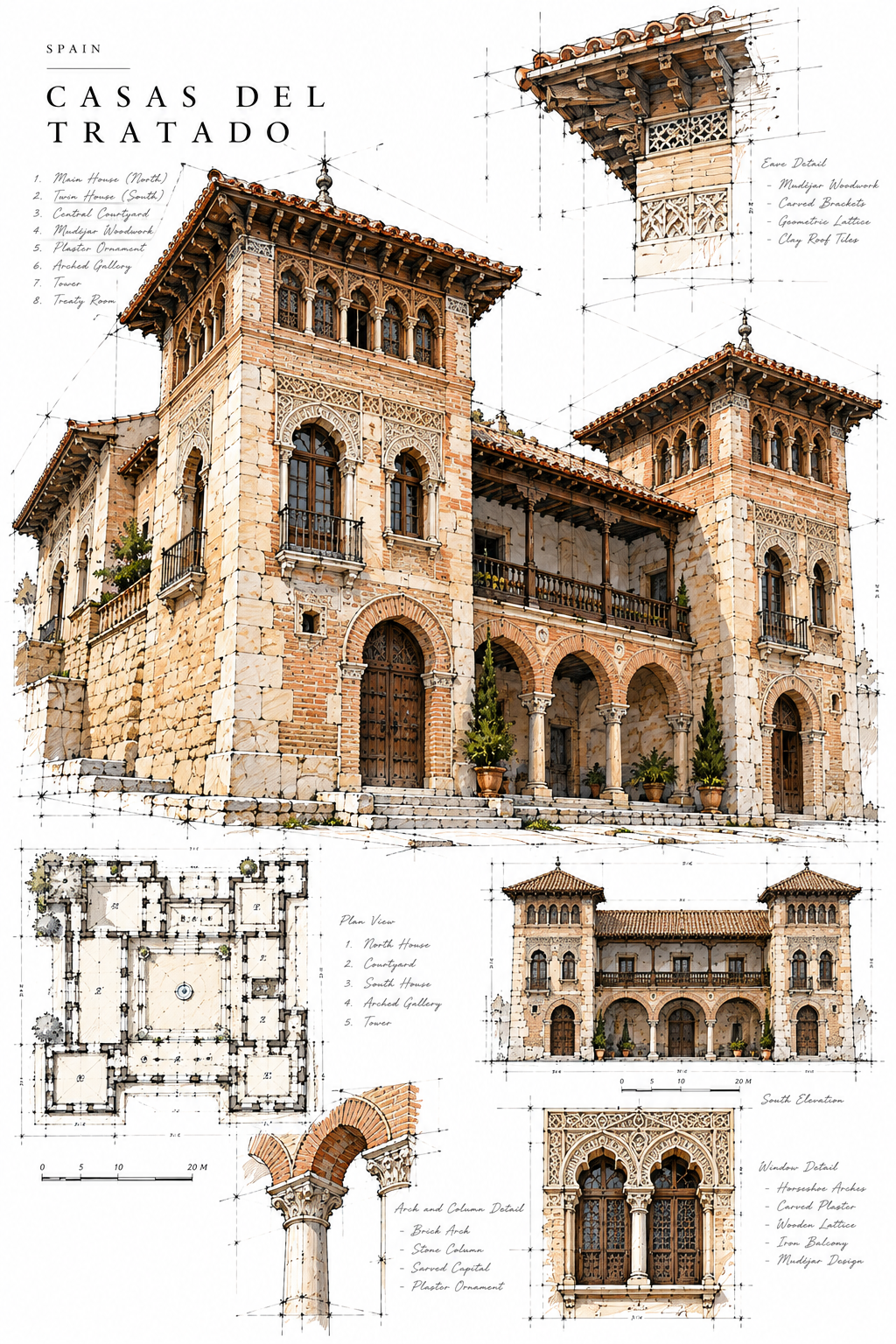 LESSON 4.5
Cartographers and Competing Claims
Select for SummaryCartographers and Competing Claims
The Treaty of Tordesillas and Mapping the New WorldTwo nations drew a single line through the Atlantic Ocean and claimed everything on either side belonged to them. Cartographers had to make sense of a rapidly expanding world, one negotiated line at a time.
Header landmark: Casas del Tratado — Tordesillas, Spain
 LESSON 4.6
France and Great Britain Join the Race
Select for SummaryFrance and Great Britain Join the Race
Competing European Claims in North AmericaSpain and Portugal had a decades-long head start, but France, England, and the Netherlands were not willing to be left out. Watching Spanish silver and Portuguese trade goods flow home, they set out to build empires of their own.
Header landmark: Place Royale and Champlain's Habitation — Quebec City
 LESSON 4.7
The Aztec Empire
Select for SummaryThe Aztec Empire
Tenochtitlán and the Triple AllianceOn a cluster of islands in a shallow lake, refugees who had once served as mercenaries built one of the largest cities on Earth. By 1502, the Aztec emperor Moctezuma II ruled an empire of thirty-eight provinces from the temples of Tenochtitlán.
Header landmark: Templo Mayor ruins — Mexico City
 LESSON 4.8
The Inca Empire
Select for SummaryThe Inca Empire
Cuzco, the Andes, and an Empire Bound by RoadsNo wheels, no writing system, and some of the most difficult terrain on Earth. Despite all of this, the Inca built an empire of twenty-five thousand miles of roads stretching from modern Colombia to Chile, tied together by a recordkeeping system made entirely of knotted string.
Header landmark: Machu Picchu — Peru
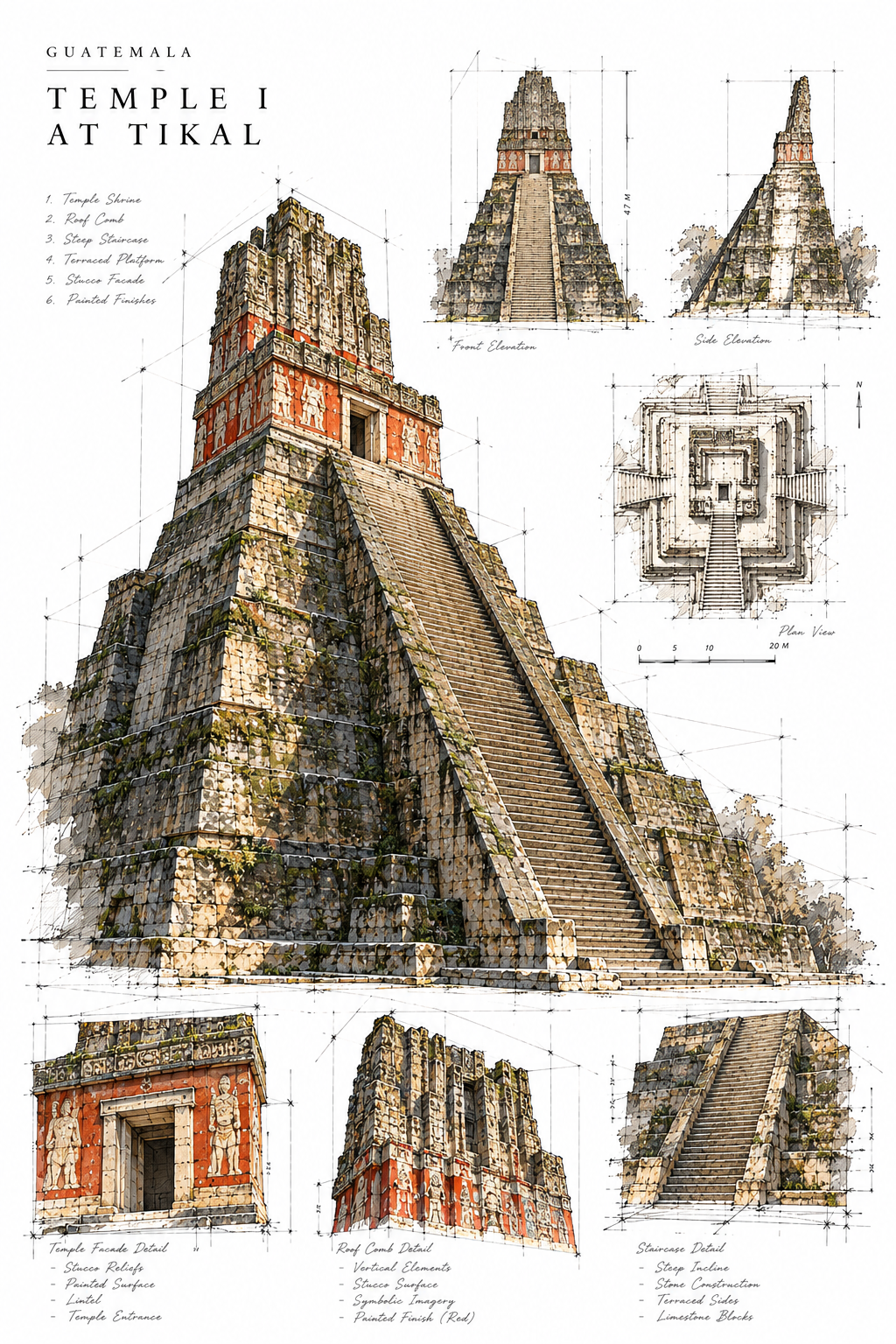 LESSON 4.9
The Maya Civilization
Select for SummaryThe Maya Civilization
City-States, Calendars, and the Concept of ZeroLong before the Aztec or Inca Empires rose to power, the Maya built forty rival city-states across Central America, developed one of the most accurate calendar systems in the ancient world, and independently invented the concept of zero.
Header landmark: Temple I at Tikal — Guatemala
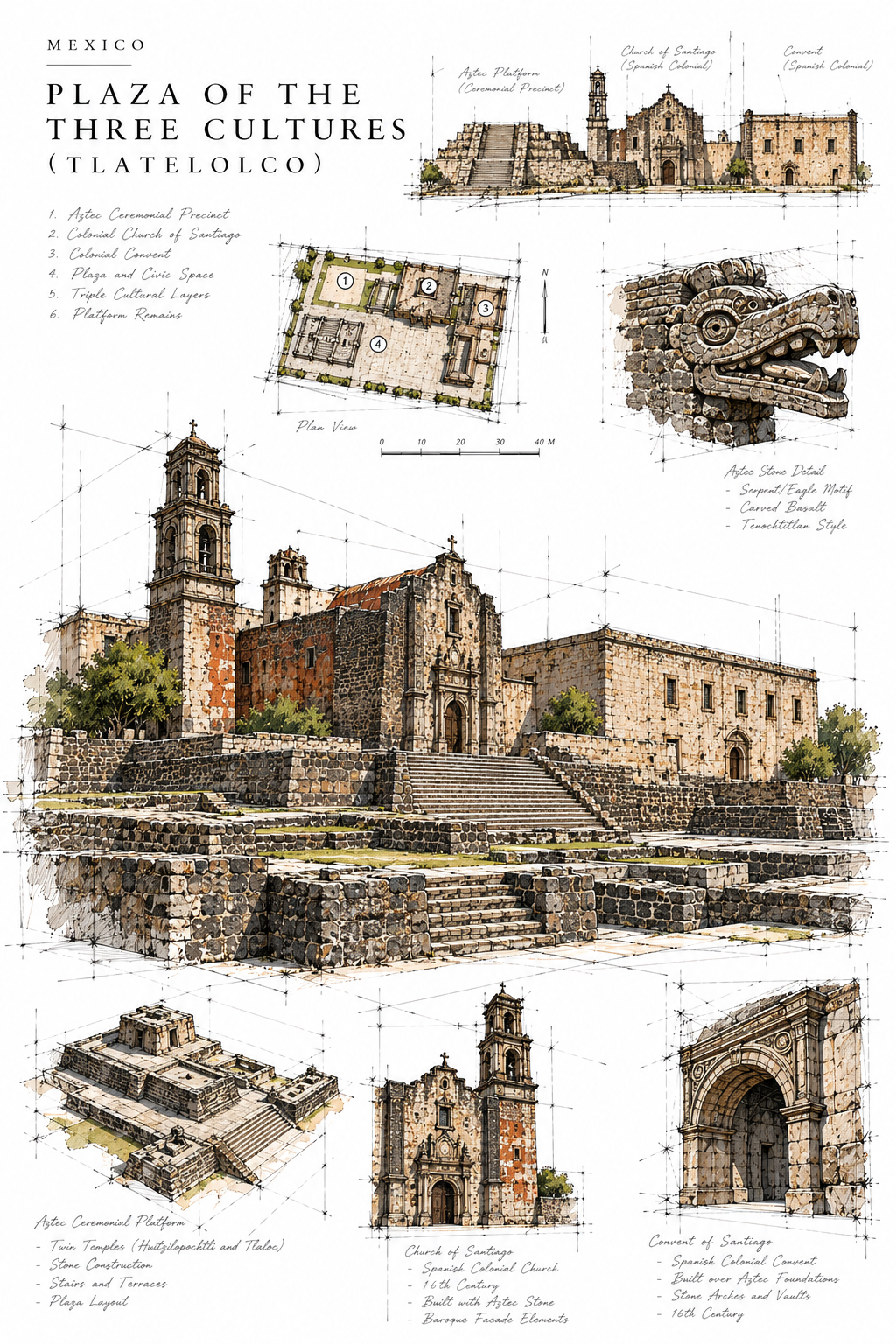 LESSON 4.10
Cortés and the Fall of the Aztec Empire
Select for SummaryCortés and the Fall of the Aztec Empire
Conquest, Disease, and the End of TenochtitlánHernán Cortés arrived in Mexico with a few hundred men. He left as the conqueror of an empire of millions, aided as much by disease and Indigenous allies as by Spanish weapons.
Header landmark: Plaza of the Three Cultures (Tlatelolco), site of the 1521 surrender — Mexico City
 LESSON 4.11
Pizarro and the Fall of the Inca Empire
Select for SummaryPizarro and the Fall of the Inca Empire
Civil War, Conquest, and Resistance in the AndesFrancisco Pizarro conquered an empire of millions with a few hundred soldiers, but he did not do it alone. A smallpox epidemic and a civil war over succession had already left the Inca Empire dangerously divided before he ever arrived.
Header landmark: Ransom Room (Cuarto del Rescate) — Cajamarca, Peru
 LESSON 4.12
Encomienda and Indigenous Resistance
Select for SummaryEncomienda and Indigenous Resistance
Forced Labor and Survival After ConquestConquest did not end with a single battle. Across the Americas, Indigenous peoples faced a new system of forced labor called the encomienda, and responded in ways ranging from armed resistance to strategic adaptation.
Header landmark: Cerro Rico silver mountain — Potosí, Bolivia
 LESSON 4.13
Bartolomé de las Casas: A Voice of Conscience
Select for SummaryBartolomé de las Casas: A Voice of Conscience
Primary Sources on the Encomienda SystemColumbus described the people of Hispaniola as gentle and easily subjugated. Fifty years later, a former encomendero turned Dominican friar called the Spanish ravening wolves. Same islands, two radically different accounts.
Header landmark: Cathedral of Santo Domingo — Dominican Republic (first cathedral in the Americas)
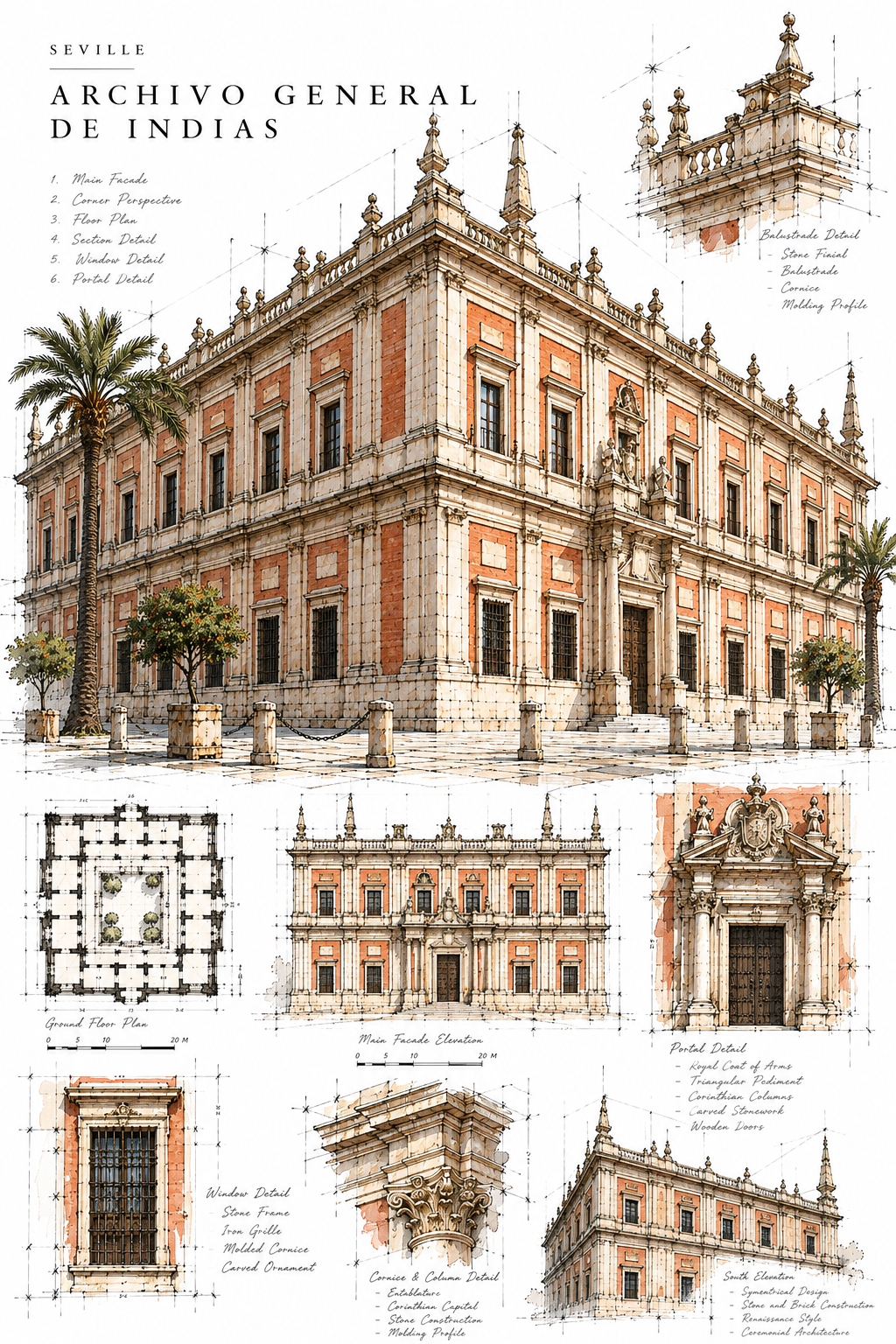 LESSON 4.14
The Columbian Exchange
Select for SummaryThe Columbian Exchange
Crops, Animals, and Disease Cross the AtlanticTomatoes were unknown in Italy. Horses were unknown in the Americas. Smallpox was unknown to Indigenous immune systems. In a single generation, contact between two hemispheres rewired agriculture, diet, and disease across the entire planet.
Header landmark: Archivo General de Indias — Seville
 LESSON 4.15
Mercantilism: Wealth, Power, and Colonies
Select for SummaryMercantilism: Wealth, Power, and Colonies
The Economic Theory Behind European ExpansionAccording to mercantilist theory, the world's wealth was a fixed pie. Every nation that got richer meant a rival got poorer. That single belief drove kings to found colonies, ban imports, and build the economic system that powered the entire Atlantic World.
Header landmark: Torre del Oro on the Guadalquivir — Seville (treasure-fleet port)
 LESSON 4.16
Critics of Mercantilism
Select for SummaryCritics of Mercantilism
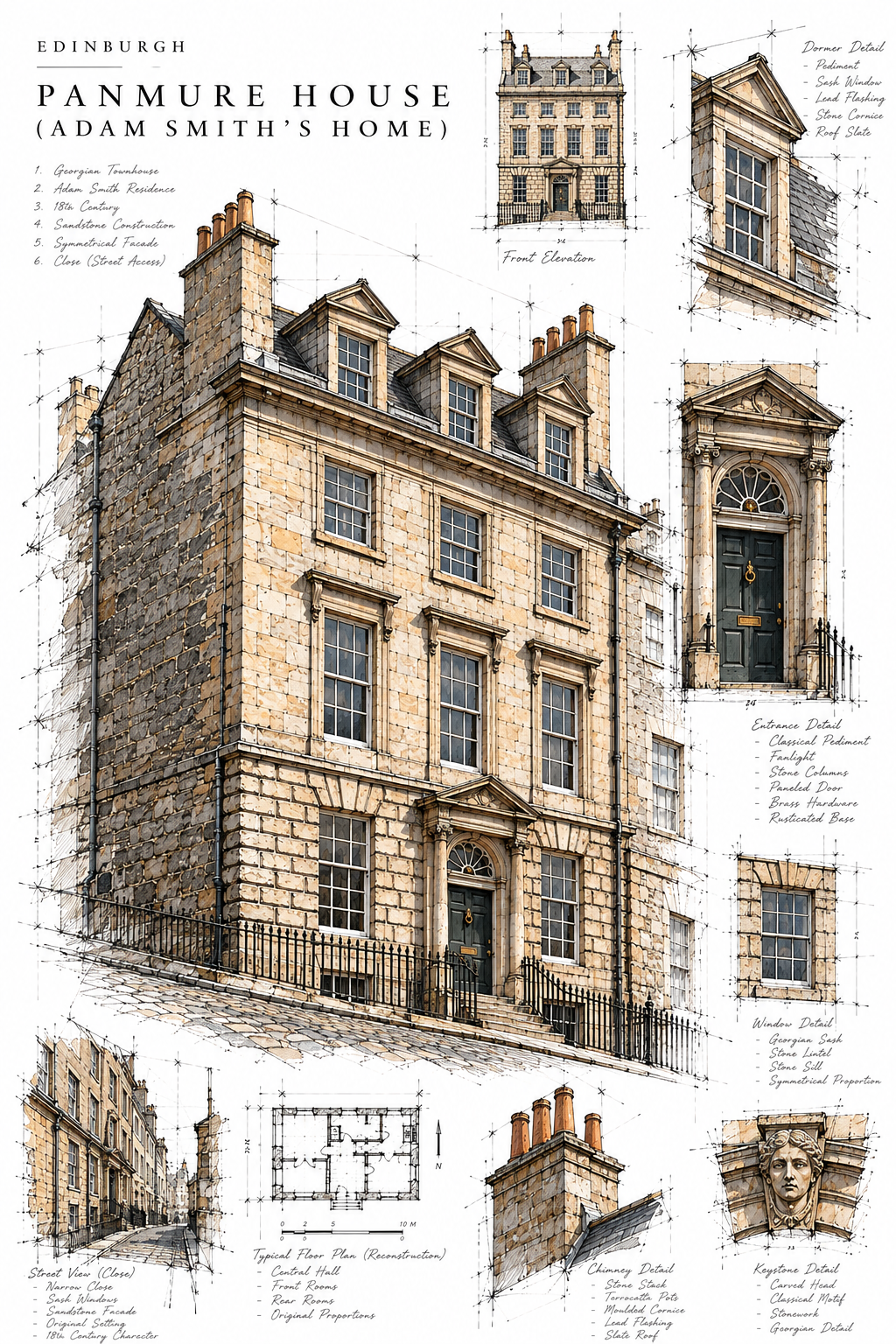
Hume, Adam Smith, and a New Economic IdeaNot everyone believed mercantilism made sense. Two Scottish thinkers argued that trade did not have to be a competition where one side wins and the other loses, an idea that would eventually reshape the global economy.
Header landmark: Panmure House (Adam Smith's home) — Edinburgh
 LESSON 4.17
From Trans-Saharan to Transatlantic
Select for SummaryFrom Trans-Saharan to Transatlantic
West Africa's Trade Networks ReorientFor centuries, West African trade flowed north across the Sahara. When Portuguese ships began arriving on the coast, and when the great empires of Songhai and Kanem-Bornu began to weaken, that trade quietly turned toward the Atlantic instead.
Header landmark: Elmina Castle — Ghana
 LESSON 4.18
The Transatlantic Slave Trade Begins
Select for SummaryThe Transatlantic Slave Trade Begins
Origins of a Devastating SystemEuropean colonists first tried to force Indigenous peoples, then European indentured servants, to labor on American plantations. Both attempts failed, at horrific human cost. What followed was a system that would forcibly transport twelve million people across an ocean.
Header landmark: House of Slaves and its 'Door of No Return' — Gorée Island, Senegal
 LESSON 4.19
The Triangular Trade
Select for SummaryThe Triangular Trade
Three Legs of a Devastating ExchangeRum for captives. Captives for sugar. Sugar for rum. The triangular trade linked three continents in a single, self-perpetuating cycle, and every leg of the triangle depended on enslaved human beings.
Header landmark: International Slavery Museum, Royal Albert Dock — Liverpool
 LESSON 4.20
The Middle Passage
Select for SummaryThe Middle Passage
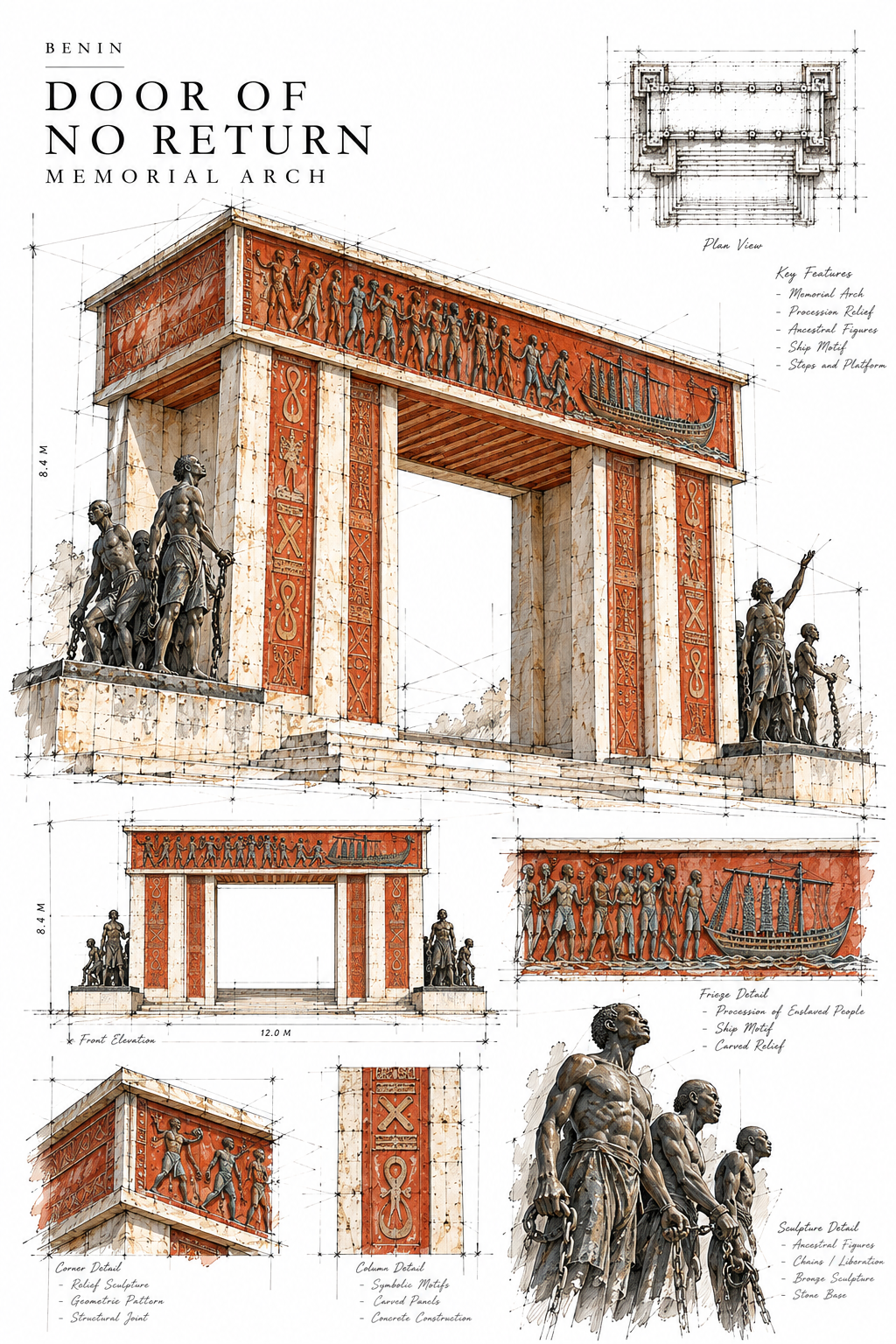
Conditions and Resistance on the Atlantic CrossingChained side by side with only inches of space above them, given food and water once a day, and held below deck for weeks at a time. As many as one in five people did not survive the Middle Passage. Those who did carried its memory for the rest of their lives.
Header landmark: Door of No Return memorial arch — Ouidah, Benin
 LESSON 4.21
Chattel Slavery: Africa and the Americas Compared
Select for SummaryChattel Slavery: Africa and the Americas Compared
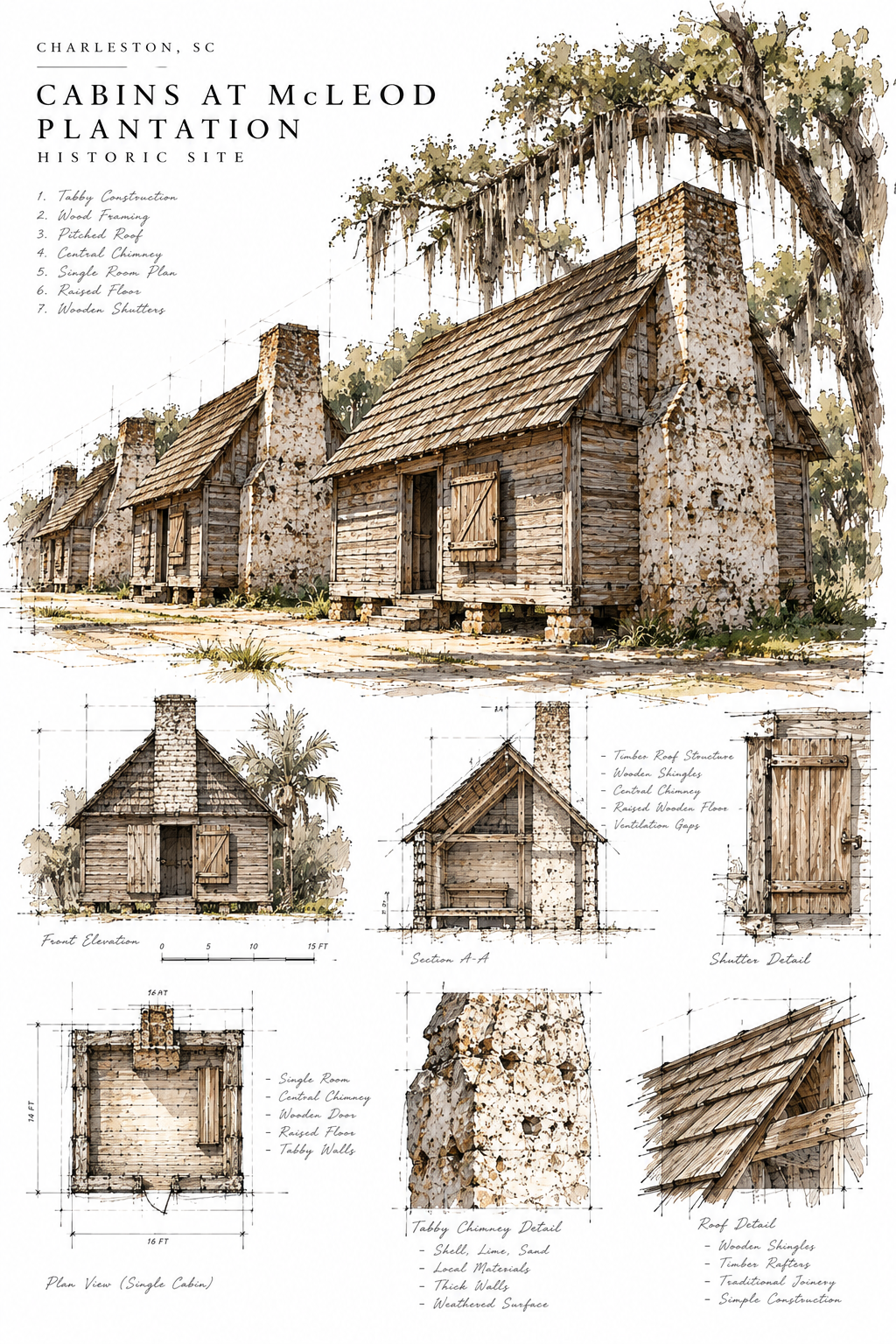
How Slavery Changed in the Atlantic WorldSlavery existed in Africa long before Europeans arrived, but it was not the same institution that took hold in the Americas. Understanding the difference reveals exactly how the Transatlantic Slave Trade transformed an old practice into something new and far more brutal.
Header landmark: Cabins at McLeod Plantation Historic Site — Charleston, SC
 LESSON 4.22
Plantation Economies
Select for SummaryPlantation Economies
Sugar, Tobacco, and the Economics of Forced LaborSugar was the most profitable crop grown by enslaved labor, and also the most physically brutal. Understanding how a plantation actually operated reveals the economic engine that drove the Transatlantic Slave Trade forward for centuries.
Header landmark: Morgan Lewis sugar windmill — Barbados
 LESSON 4.23
Indentured Servitude and Forced Migration
Select for SummaryIndentured Servitude and Forced Migration
Comparing Coerced Labor Across the Atlantic WorldNot everyone who crossed the Atlantic in chains was enslaved for life, and not everyone who came voluntarily arrived free of coercion. The line between different forms of forced and unfree labor in the Atlantic World was often blurrier than it first appears.
Header landmark: Historic Jamestowne — Virginia
 LESSON 4.24
Multiple Perspectives on the Atlantic World
Select for SummaryMultiple Perspectives on the Atlantic World
Building an Evidence-Based ArgumentA Spanish conquistador, an Aztec survivor, an enslaved African, and an economist each experienced the birth of the Atlantic World differently. Today, you gather their perspectives and use them as evidence to make your own claim.
Header landmark: National Museum of African American History and Culture — Washington, D.C.
 LESSON 4.25
Unit Synthesis: Did Global Exchange Unite or Divide?
Select for SummaryUnit Synthesis: Did Global Exchange Unite or Divide?
Answering the Overarching Inquiry QuestionTwenty-four lessons ago, a closed trade route sent Europe looking west. Empires fell, continents exchanged crops and diseases, and twelve million people were forced across an ocean in chains. Now it is time to answer the question this entire unit has been building toward.
Header landmark: The Ark of Return memorial — United Nations, New York