Classical Civilizations
Every lesson in this unit has its own card. Select a card to flip it, read what the lesson is about, then open the lesson when you are ready.

Lesson Card Summaries
Hover over a card to light it up. Select it to flip the card for the lesson summary.
 LESSON 2.1
The Line Between Early and Classical
Select for SummaryThe Line Between Early and Classical
Unit Launch, What Makes a Civilization “Classical”Every civilization you studied in Unit 1 was still building its first walls. This unit picks up centuries later, when four of those civilizations grow into something larger: empires that unite strangers under one law, one language, or one faith. Today you learn the tool historians use to track that growth.
Header landmark: Four-panel strip: Great Wall · Great Stupa at Sanchi · Parthenon · Colosseum
 LESSON 2.2
The Mandate of Heaven
Select for SummaryThe Mandate of Heaven
Classical China I, The Zhou DynastyA new ruling family in China claims something no Shang king ever needed to claim: permission from Heaven itself. Today you examine the idea that would justify, and later overthrow, every dynasty in Chinese history for the next three thousand years.
Header landmark: Temple of Heaven — Beijing
 LESSON 2.3
Earning the Seal, Not Inheriting It
Select for SummaryEarning the Seal, Not Inheriting It
Classical China II, The Han DynastyAfter centuries of war, one dynasty finally unifies China and keeps it unified for four hundred years. Its secret is not a bigger army. It is a new answer to an old question: who gets to hold power?
Header landmark: Han-era Great Wall and the Jade Gate (Yumen Pass) — Gansu
 LESSON 2.4
The Emperor Who Renounced War
Select for SummaryThe Emperor Who Renounced War
Classical India I, The Mauryan EmpireA ruler conquers more territory than any Indian emperor before him, looks at the devastation he has caused, and changes completely. Today you trace how one battle turned a conqueror into the ancient world's most unusual missionary.
Header landmark: Great Stupa at Sanchi — Madhya Pradesh, India
 LESSON 2.5
India's Golden Age
Select for SummaryIndia's Golden Age
Classical India II, The Gupta EmpireCenturies after Ashoka, a new dynasty rules over one of the most productive periods of scientific and artistic achievement in the ancient world, including an invention so basic to modern math that you have used it today without thinking about it.
Header landmark: Ajanta Caves — Maharashtra, India
 LESSON 2.6
Ancient Greece I: Geography, Mycenaeans, and the Rise of City-States
Select for SummaryAncient Greece I: Geography, Mycenaeans, and the Rise of City-States
Mountains, Islands, and the Birth of the PolisGreece never became one nation in the ancient world, and its geography is the reason why. Today we see how mountains and islands built independence into Greek civilization from the start.
Header landmark: Lion Gate of Mycenae
 LESSON 2.7
From Palace to Polis
Select for SummaryFrom Palace to Polis
Classical Greece I, The Rise of the City-StateA Bronze Age civilization collapses so completely that Greece forgets how to write for centuries. What rises from the wreckage is not one kingdom, but hundreds of small, fiercely independent city-states, including one that invents a new way to be ruled.
Header landmark: Acropolis of Athens with the Parthenon
 LESSON 2.8
Ancient Greece II: The Persian Wars and the Limits of Empire
Select for SummaryAncient Greece II: The Persian Wars and the Limits of Empire
When Divided City-States Beat an EmpireThe Persian Empire was the largest power on Earth. Today we find out how a handful of divided, quarreling Greek city-states managed to stop it, and why that victory still matters.
Header landmark: Leonidas Monument at Thermopylae
 LESSON 2.9
Two Cities, Two Wars
Select for SummaryTwo Cities, Two Wars
Classical Greece II, Sparta, Athens, and WarTwo Greek city-states could not be more different, one built around free debate, the other around military discipline. First they unite to survive an invasion. Then they turn on each other. Today you weigh the evidence from both sides.
Header landmark: Ruins of ancient Sparta beneath Mount Taygetus
 LESSON 2.10
One Empire, A Thousand Cultures
Select for SummaryOne Empire, A Thousand Cultures
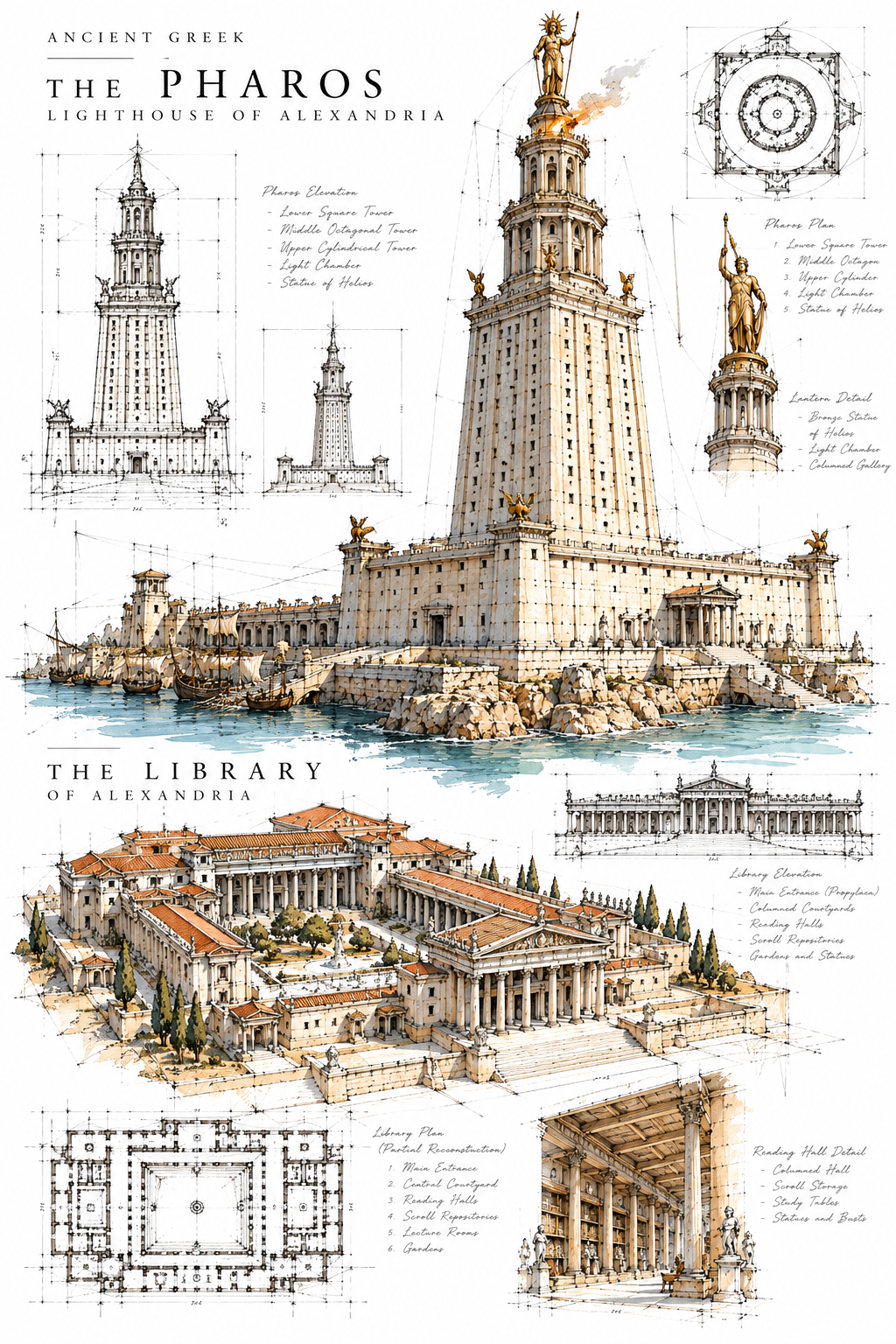
Alexander the Great and Hellenistic DiffusionA young king from a kingdom most Greeks considered half-barbarian conquers the largest empire the ancient world had ever seen, and in doing so, scatters Greek culture across three continents. Today you trace what a single conqueror's death set loose.
Header landmark: Lighthouse (Pharos) and Library of Alexandria — reconstruction
 LESSON 2.11
Ancient Rome: From Village to Republic
Select for SummaryAncient Rome: From Village to Republic
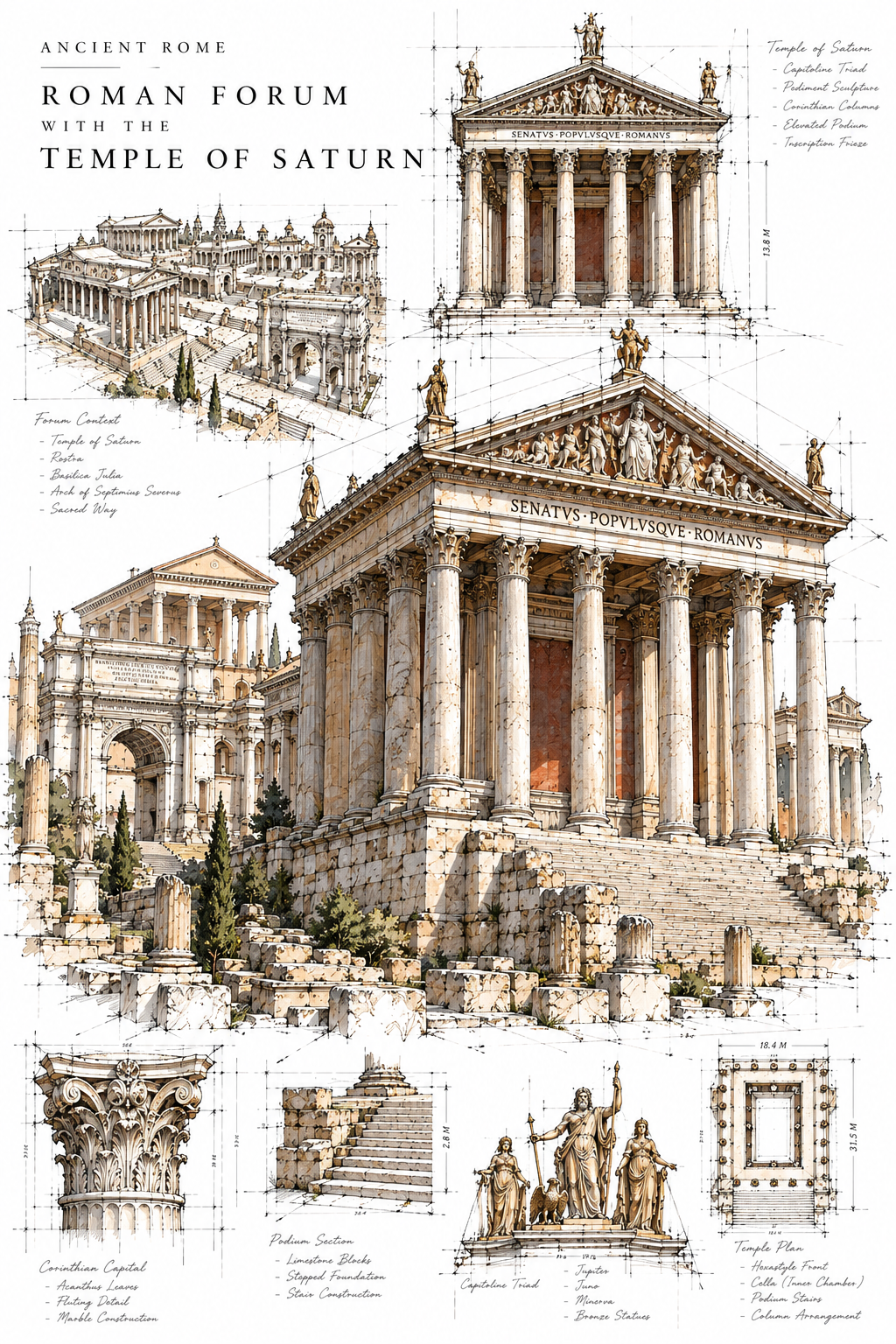
Overthrowing Kings and Sharing PowerRome did not start as an empire, or even as a republic. It started as a small village ruled by kings. Today we trace how it became something new: a government designed so no one person could hold all the power.
Header landmark: Roman Forum with the Temple of Saturn
 LESSON 2.12
From Kings to Consuls to Caesar
Select for SummaryFrom Kings to Consuls to Caesar
Classical Rome I, Republic and the End of an EraRome starts small: a single city ruled by kings on the banks of the Tiber. It ends its early story by overthrowing those kings entirely, building a government designed to prevent any one person from ever ruling alone again. Then one man breaks that design.
Header landmark: Curia Julia (Senate House) — Roman Forum
 LESSON 2.13
Peace, Paved in Stone
Select for SummaryPeace, Paved in Stone
Classical Rome II, The Pax RomanaAfter a century of civil war, Rome enters roughly two hundred years of relative peace and stability, long enough to build roads, aqueducts, and legal traditions still standing, and still cited, today.
Header landmark: Colosseum — Rome
 LESSON 2.14
One God, Two Faiths
Select for SummaryOne God, Two Faiths
World Religions I, Judaism and ChristianityTwo of the world's major religions share deep roots in the same region and the same core belief: that there is only one God. Today you trace how those roots grew in different directions, and how one small movement inside the Roman Empire eventually reshaped it.
Header landmark: Western Wall — Jerusalem
 LESSON 2.15
A Faith Born on the Trade Routes
Select for SummaryA Faith Born on the Trade Routes
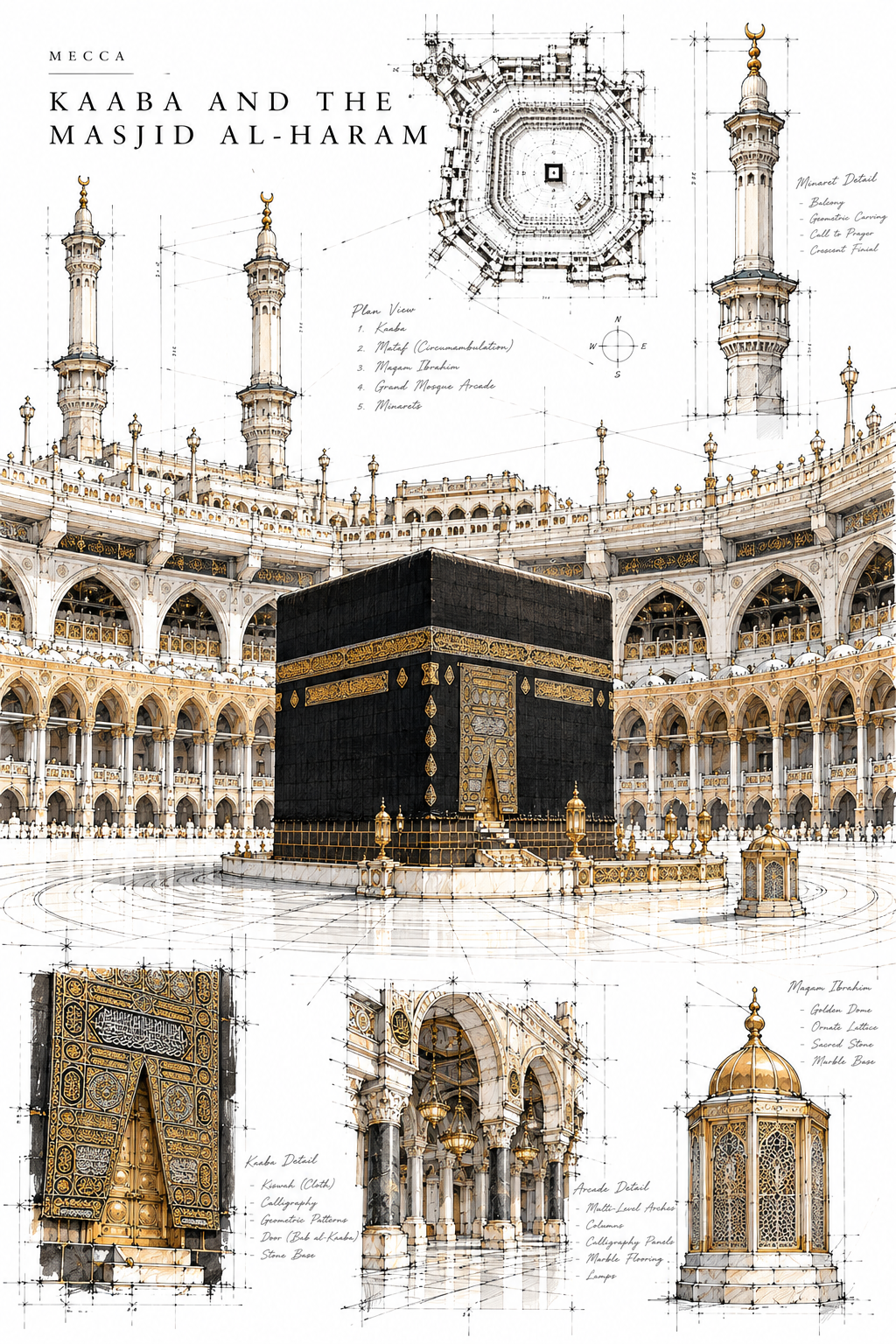
World Religions II, IslamCenturies after Christianity's rise, a third major monotheistic religion emerges in Arabia and spreads faster than almost any belief system in history, carried by trade, scholarship, and conquest across three continents.
Header landmark: Kaaba and the Masjid al-Haram — Mecca
 LESSON 2.16
Rome That Never Fell
Select for SummaryRome That Never Fell
The Byzantine Empire and Justinian IWhile the western half of the Roman Empire collapses, its eastern half survives, and thrives, for another thousand years under a different name. Today you meet the emperor who tried to reunite Rome, and the faith his empire carried into the modern world.
Header landmark: Hagia Sophia — Istanbul
 LESSON 2.17
The Road That Connected Everyone
Select for SummaryThe Road That Connected Everyone
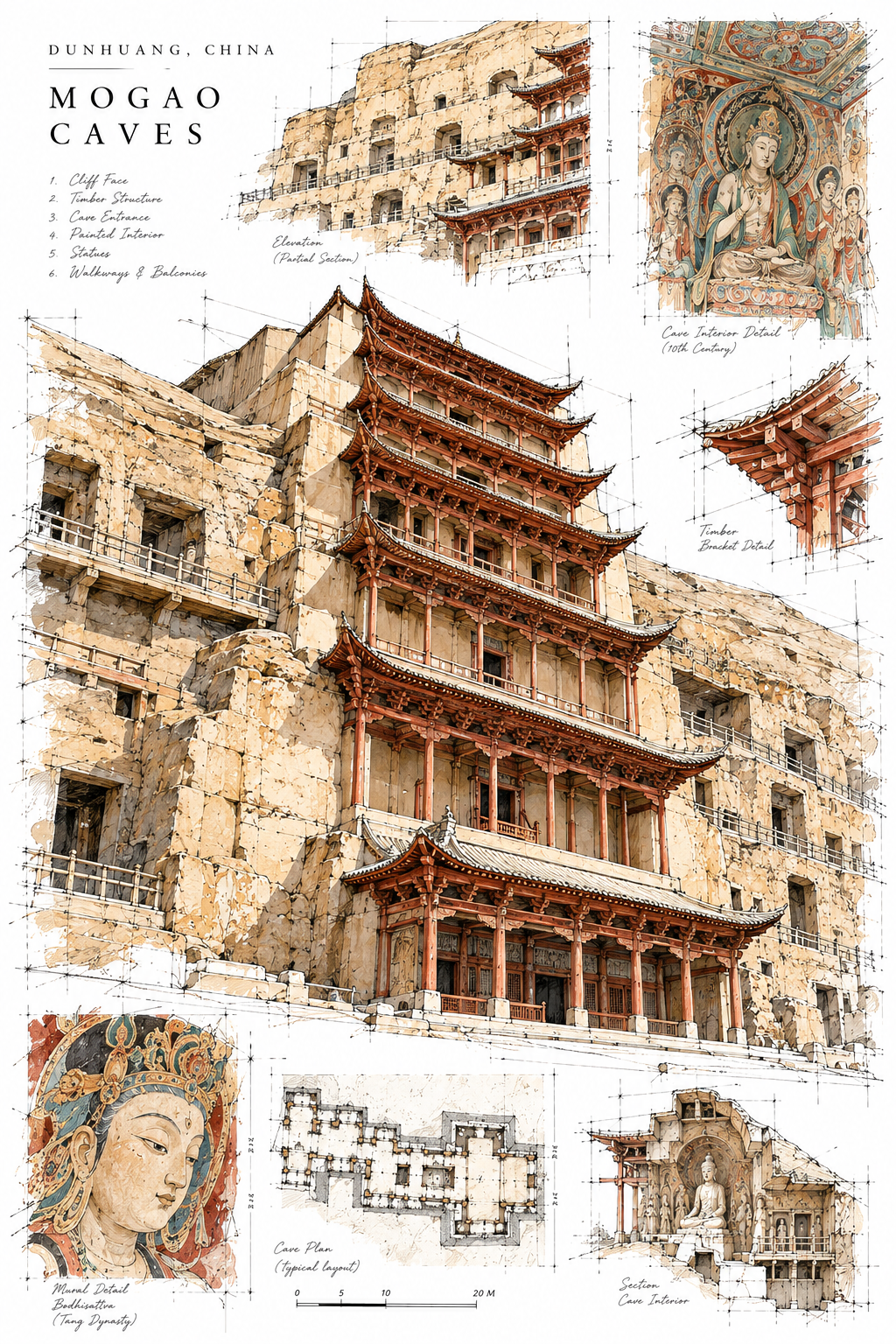
The Silk Road and Classical Trade NetworksNo classical civilization in this unit grew in isolation. A vast web of trade routes connected China, India, Persia, and Rome long before any of their citizens ever met face to face. Today you trace what traveled those routes besides silk.
Header landmark: Mogao Caves — Dunhuang, China
 LESSON 2.18
Four Civilizations, One Question
Select for SummaryFour Civilizations, One Question
Unit Synthesis and ReviewYou have tracked China, India, Greece, and Rome across seventeen lessons. Today you step back, open your full GRAPES chart, and answer the question this unit asked from the very first lesson: how have advancements changed the course of history?
Header landmark: Four-panel strip: Temple of Heaven · Ajanta · Acropolis · Pantheon