Political Systems and Individual Rights
Every lesson in this unit has its own card. Select a card to flip it, read what the lesson is about, then open the lesson when you are ready.
Lesson Card Summaries
Hover over a card to light it up. Select it to flip the card for the lesson summary.
 LESSON 5.1
Who Gets to Rule, and Why?
Select for SummaryWho Gets to Rule, and Why?
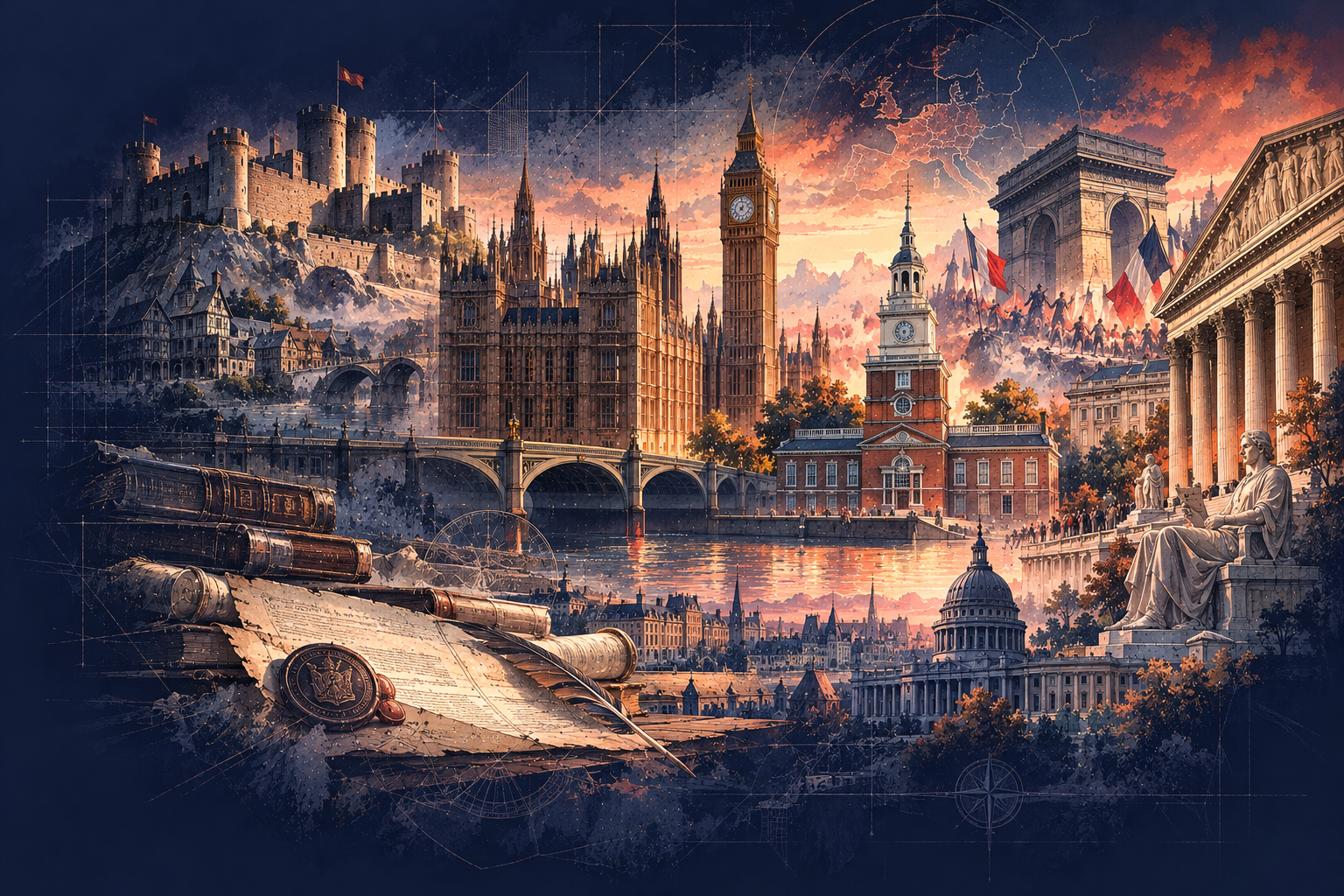
Unit Launch, Framing Political Systems and Individual RightsEvery government in history has had to answer the same question: who holds power, and what happens to everyone else? This unit follows that question across six centuries, from feudal lords to revolutionaries, as you build evidence toward a claim of your own.
Header landmark: Palace of Westminster — London
 LESSON 5.2
Loyalty From the Top Down
Select for SummaryLoyalty From the Top Down
Feudal Japan, Power Through LoyaltyIn feudal Japan, land and power flowed through a strict chain of loyalty, from the emperor down to the shogun, the daimyo, and the samurai, all the way to peasants who had almost no political voice at all.
Header landmark: Himeji Castle — Japan
 LESSON 5.3
A Continent Built on Oaths
Select for SummaryA Continent Built on Oaths
Feudal Europe, Land for LoyaltyMedieval Europe built its own hierarchy of loyalty, but bound it together not with a warrior's code, but with land contracts, sworn oaths, and the enormous political power of the Roman Catholic Church.
Header landmark: Cité de Carcassonne — France
 LESSON 5.4
Two Continents, One Pattern
Select for SummaryTwo Continents, One Pattern
Comparison Skill Practice, Feudal Japan and Feudal EuropeSeparated by an entire ocean and with no contact with one another, feudal Japan and feudal Europe still built strikingly similar systems of power. Today you compare them formally, using standard 6.2.CO.
Header landmark: Split header: Matsumoto Castle | Bodiam Castle
 LESSON 5.5
The King Signs Away His Power
Select for SummaryThe King Signs Away His Power
Religion, Monarchy, and the Magna CartaFor centuries, Europe's Church shaped political life alongside its kings. Then, in 1215, a group of furious nobles cornered King John of England and forced him to accept the first written limits on royal power.
Header landmark: Magna Carta Memorial — Runnymede, England
 LESSON 5.6
I Am the State
Select for SummaryI Am the State
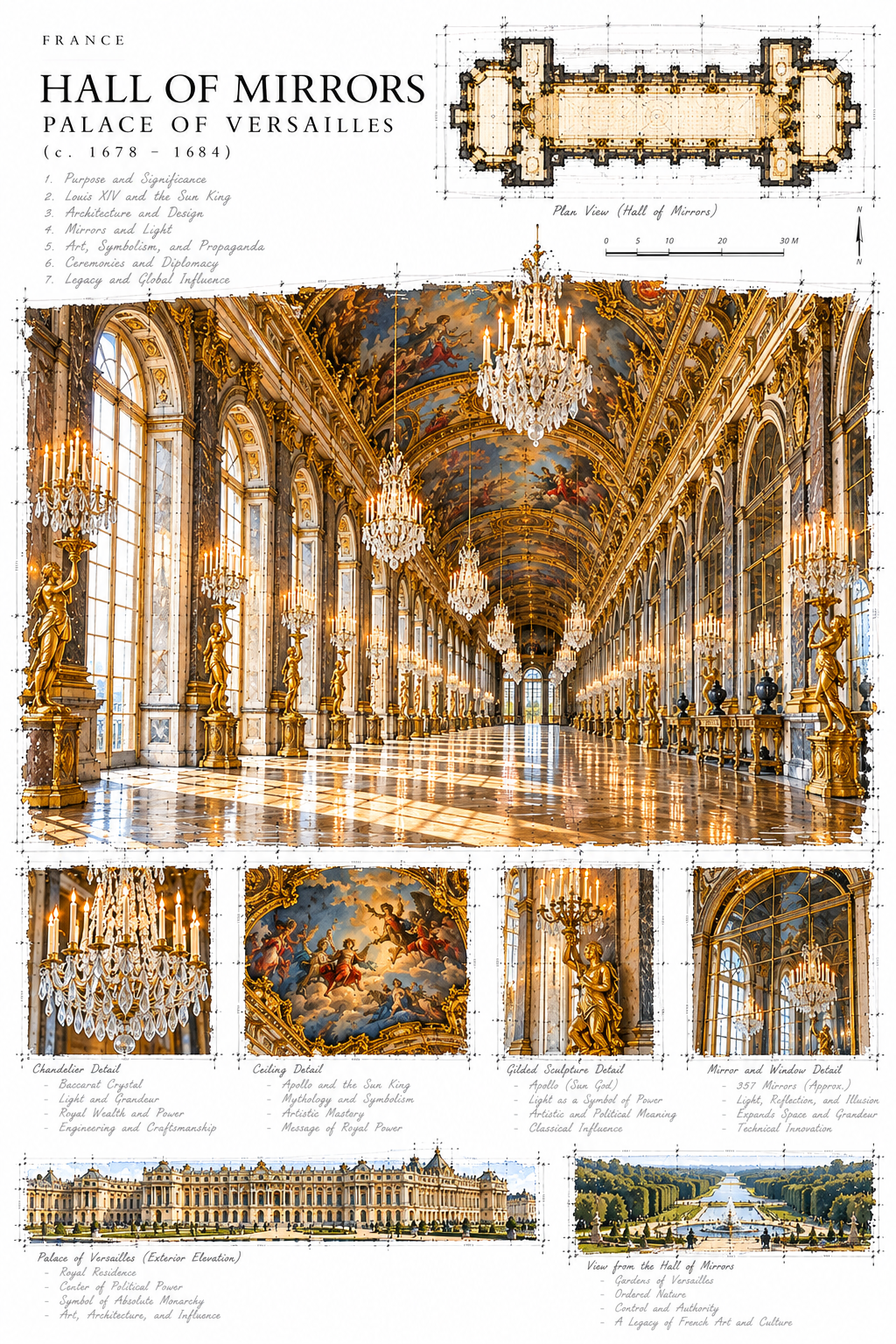
Absolute Monarchy, Divine Right and Unlimited PowerSome monarchs did not just claim power, they claimed it came directly from God, and built entire systems designed to remove every possible check on their word.
Header landmark: Hall of Mirrors, Palace of Versailles
 LESSON 5.7
Unlimited or Limited: Two Answers to the Same Problem
Select for SummaryUnlimited or Limited: Two Answers to the Same Problem
Comparison Skill Practice, Absolute and Limited GovernmentThe Magna Carta cracked open the idea that a monarch's power could be limited. Absolute monarchs like Louis XIV tried to slam that crack shut. Today you compare the two paths formally, using standard 6.2.CO.
Header landmark: Banqueting House, Whitehall — London (Charles I executed 1649; Bill of Rights offered 1689)
 LESSON 5.8
Rediscovering the Individual
Select for SummaryRediscovering the Individual
The Renaissance, Humanism Puts People at the CenterMedieval Europe mostly asked what God intended for the world. Starting in Renaissance Italy, thinkers began asking a very different question: what could a single human being achieve?
Header landmark: Florence Cathedral and Brunelleschi's Dome
 LESSON 5.9
Ninety-Five Arguments Against Rome
Select for SummaryNinety-Five Arguments Against Rome
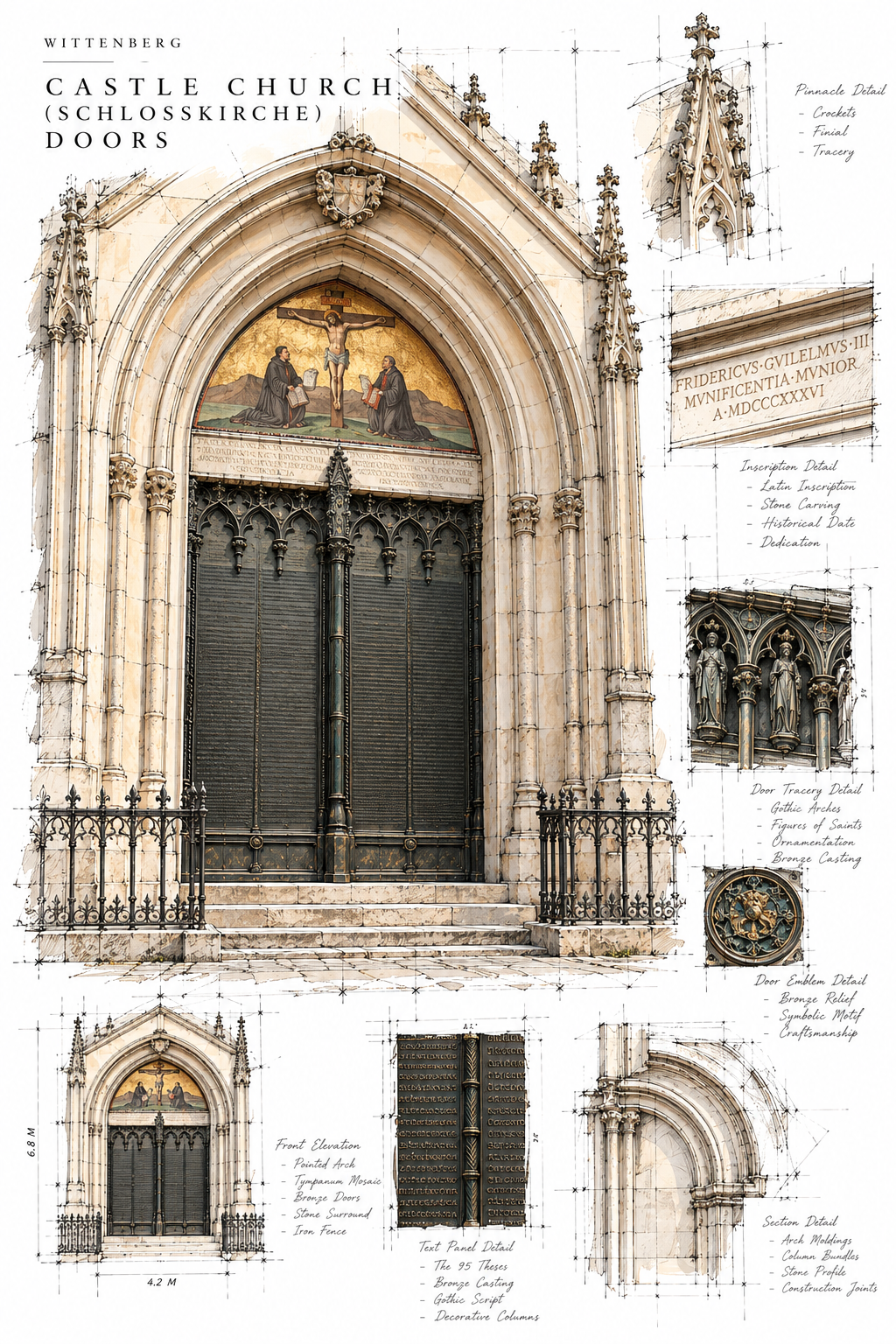
The Protestant Reformation, Challenging Religious AuthorityIn 1517, a German monk nailed a list of complaints to a church door. Within decades, Europe's religious map was permanently redrawn, and a new habit of questioning authority had taken hold.
Header landmark: Castle Church (Schlosskirche) doors — Wittenberg
 LESSON 5.10
A King Breaks With Rome
Select for SummaryA King Breaks With Rome
The Church of England, Religion Reshapes a ThroneHenry VIII wanted an annulment the Pope would not grant. Rather than accept no for an answer, he broke England away from the Roman Catholic Church entirely, and English religion and politics were never the same.
Header landmark: Hampton Court Palace — England
 LESSON 5.11
The Universe Rearranges Itself
Select for SummaryThe Universe Rearranges Itself
The Scientific Revolution, Observation Challenges BeliefFor over a thousand years, nearly everyone in Europe believed Earth sat still at the center of the universe. A telescope, and the courage to trust what it showed, proved them wrong.
Header landmark: Royal Observatory — Greenwich
 LESSON 5.12
If Nature Has Laws, Why Not Government?
Select for SummaryIf Nature Has Laws, Why Not Government?
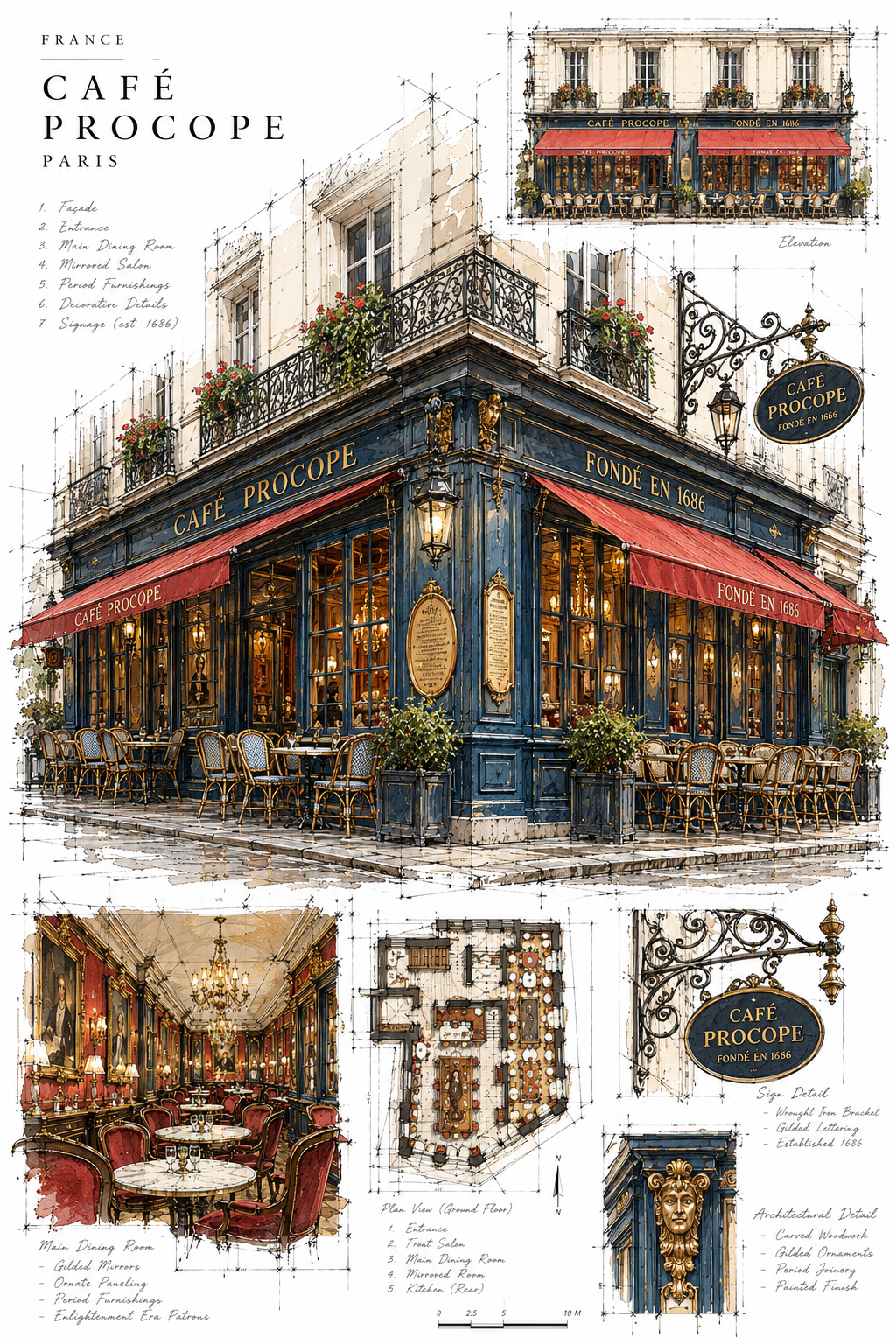
The Enlightenment, Applying Reason to GovernmentIf Newton could use reason to uncover the laws that govern planets, Enlightenment thinkers wondered, could reason also uncover the laws that should govern people?
Header landmark: Café Procope — Paris
 LESSON 5.13
From Humanism to Enlightenment: One Long Argument
Select for SummaryFrom Humanism to Enlightenment: One Long Argument
Continuities and Changes Skill Practice, Standard 6.3.CCTwo hundred years, four movements, one long argument: that individual human reason deserved more trust than inherited authority. Today you trace that argument formally, using standard 6.3.CC.
Header landmark: Long Room, Trinity College Library — Dublin
 LESSON 5.14
Enlightenment Ideas on a Battlefield
Select for SummaryEnlightenment Ideas on a Battlefield
The American Revolution, Testing Enlightenment IdeasEnlightenment thinkers wrote about natural rights and government by consent. American colonists decided to test those ideas with muskets, and then with a Declaration.
Header landmark: Independence Hall — Philadelphia
 LESSON 5.15
Bread, Debt, and a Broken System
Select for SummaryBread, Debt, and a Broken System
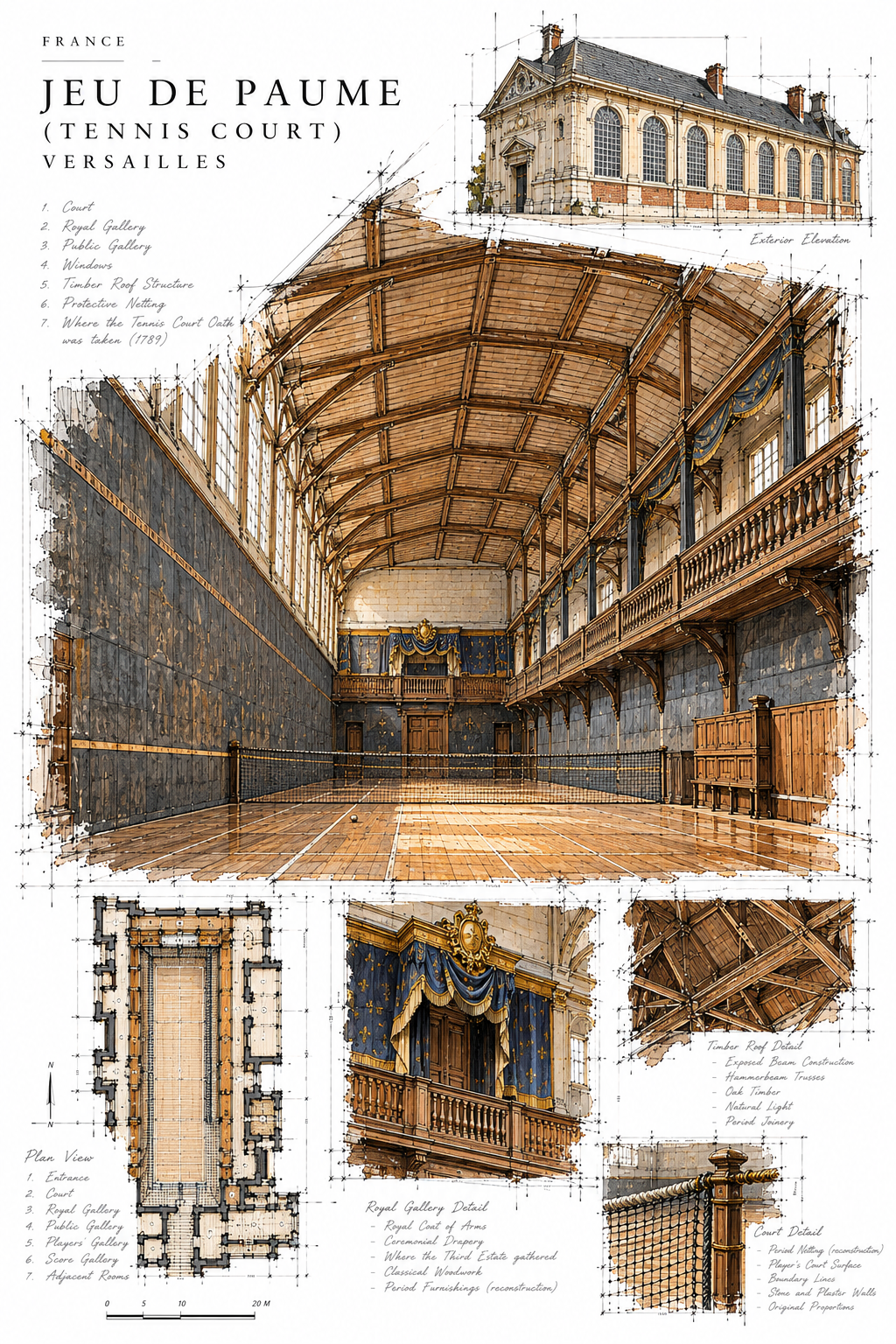
The French Revolution, Causes and the Declaration of RightsFrance's monarchy spent itself into crisis while ordinary people struggled to afford bread, and the Enlightenment gave them the language to demand something better.
Header landmark: Jeu de Paume (Tennis Court) — Versailles
 LESSON 5.16
When a Revolution Turns on Itself
Select for SummaryWhen a Revolution Turns on Itself
The French Revolution, Terror and Unfinished RightsThe revolution that promised liberty and equality for all citizens soon began executing thousands of its own people, while a playwright argued its promises hadn't gone nearly far enough.
Header landmark: Place de la Concorde (formerly Place de la Révolution) — Paris
 LESSON 5.17
The Revolution Europe Didn't Expect
Select for SummaryThe Revolution Europe Didn't Expect
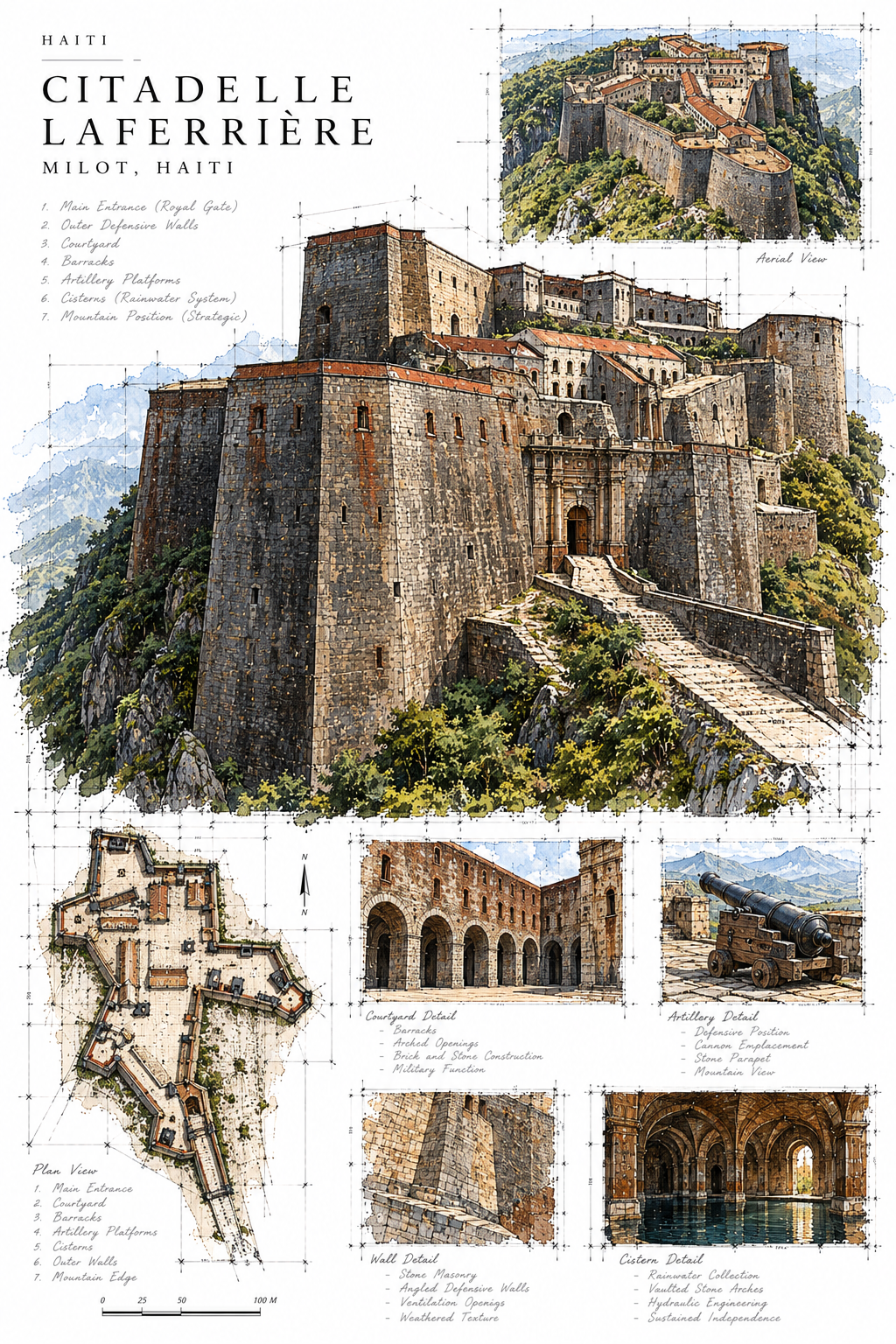
The Haitian Revolution, Freedom Through UprisingFrance's Declaration of the Rights of Man claimed all men were born free and equal. Enslaved people in France's wealthiest colony decided to hold France to its own word, by force.
Header landmark: Citadelle Laferrière — Haiti
 LESSON 5.18
Three Revolutions, One Enlightenment
Select for SummaryThree Revolutions, One Enlightenment
Comparison Skill Practice, Standard 6.4.COThree revolutions, on three different continents, drew from the same Enlightenment well, and produced three very different outcomes. Today you compare them formally, using standard 6.4.CO.
Header landmark: Triptych: Independence Hall · Bastille site · Citadelle Laferrière
 LESSON 5.19
The Revolution Finds an Emperor
Select for SummaryThe Revolution Finds an Emperor
Napoleon Bonaparte, Order Rebuilt Around One ManOut of the chaos the French Revolution left behind rose a young military officer who promised order, and delivered it, at the cost of the revolution's own democratic ideals.
Header landmark: Arc de Triomphe — Paris
 LESSON 5.20
Putting the Old World Back Together
Select for SummaryPutting the Old World Back Together
The Congress of Vienna, Restoring Order After NapoleonAfter Napoleon's final defeat, European powers gathered to redraw the map and make sure nothing like the French Revolution ever spread across the continent again.
Header landmark: Hofburg Palace — Vienna
 LESSON 5.21
Loyalty to a Nation, Not Just a Crown
Select for SummaryLoyalty to a Nation, Not Just a Crown
The Rise of Nationalism, A New Kind of LoyaltyFor centuries, most people's loyalty belonged to a king, a religion, or a local lord. In the 19th century, millions of people began feeling loyal to something new: a nation.
Header landmark: Brandenburg Gate — Berlin
 LESSON 5.22
Nationalism Crosses an Ocean
Select for SummaryNationalism Crosses an Ocean
Latin American Independence, Nationalism Spreads SouthwardThe same nationalist sentiment reshaping Europe also swept through Spain's American colonies, led by leaders determined to break from European rule entirely.
Header landmark: Plaza de Bolívar — Bogotá
 LESSON 5.23
From Napoleon to a New Map of the World
Select for SummaryFrom Napoleon to a New Map of the World
Continuities and Changes Skill Practice, Standard 6.4.CCFrom one general's conquests to independence movements on two continents, nationalism grew, spread, and reshaped the map of the world in less than a century. Today you trace that progression formally.
Header landmark: Lion's Mound at Waterloo — Belgium
 LESSON 5.24
How Have Political Systems Impacted Individual Rights?
Select for SummaryHow Have Political Systems Impacted Individual Rights?
Unit Synthesis, Answering the Overarching Inquiry QuestionTwenty-three lessons, six centuries, one question still waiting for your answer: how have political systems throughout history impacted individual rights? Today you use multiple perspectives and evidence to answer it.
Header landmark: Rotunda of the National Archives (Charters of Freedom) — Washington, D.C.