Early Global Interactions
Every lesson in this unit has its own card. Select a card to flip it, read what the lesson is about, then open the lesson when you are ready.

Lesson Card Summaries
Hover over a card to light it up. Select it to flip the card for the lesson summary.
 LESSON 3.1
A World Stitched Together
Select for SummaryA World Stitched Together
Unit Launch, What Is Global Exchange?Between 550 and 1760 CE, no civilization grew wealthy, powerful, or influential by staying home. Empires rose by controlling roads, rivers, and sea lanes that carried other people's goods, ideas, and beliefs. Today you meet the question this entire unit will keep asking: what happens to a society when it opens its doors to the rest of the world?
Header landmark: Bosphorus Strait with Constantinople's skyline (crossroads of Europe and Asia)
 LESSON 3.2
Rome's Eastern Heir
Select for SummaryRome's Eastern Heir
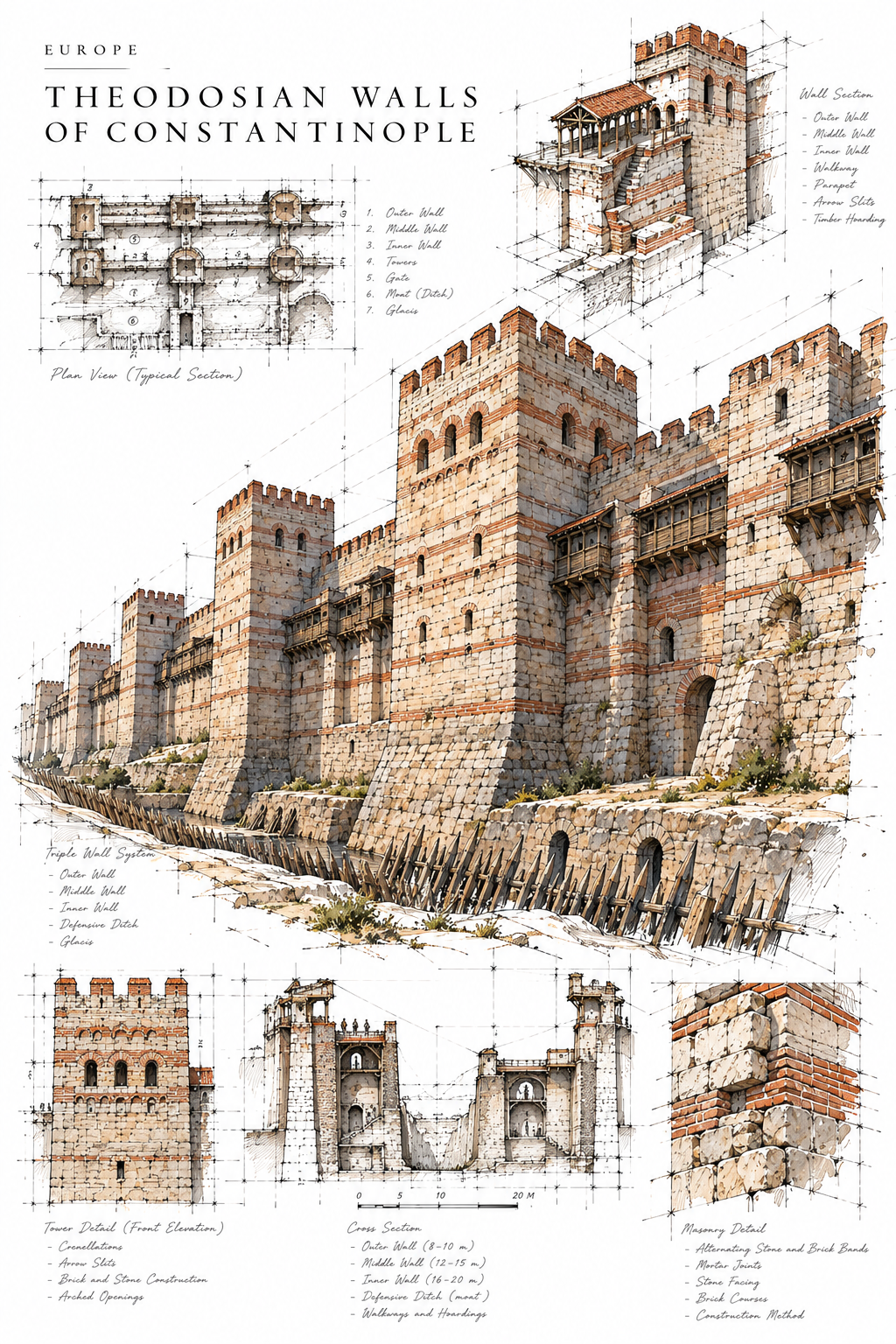
The Byzantine Empire I, Constantinople and the Roman EastRome never really fell everywhere at once. While the western half of the empire fractured into new kingdoms, its eastern half kept calling itself Roman for another thousand years from a new capital: Constantinople. Today you meet the empire historians call Byzantine, and the crisis that pushed Rome's center of gravity east in the first place.
Header landmark: Theodosian Walls of Constantinople
 LESSON 3.3
Justinian's Empire
Select for SummaryJustinian's Empire
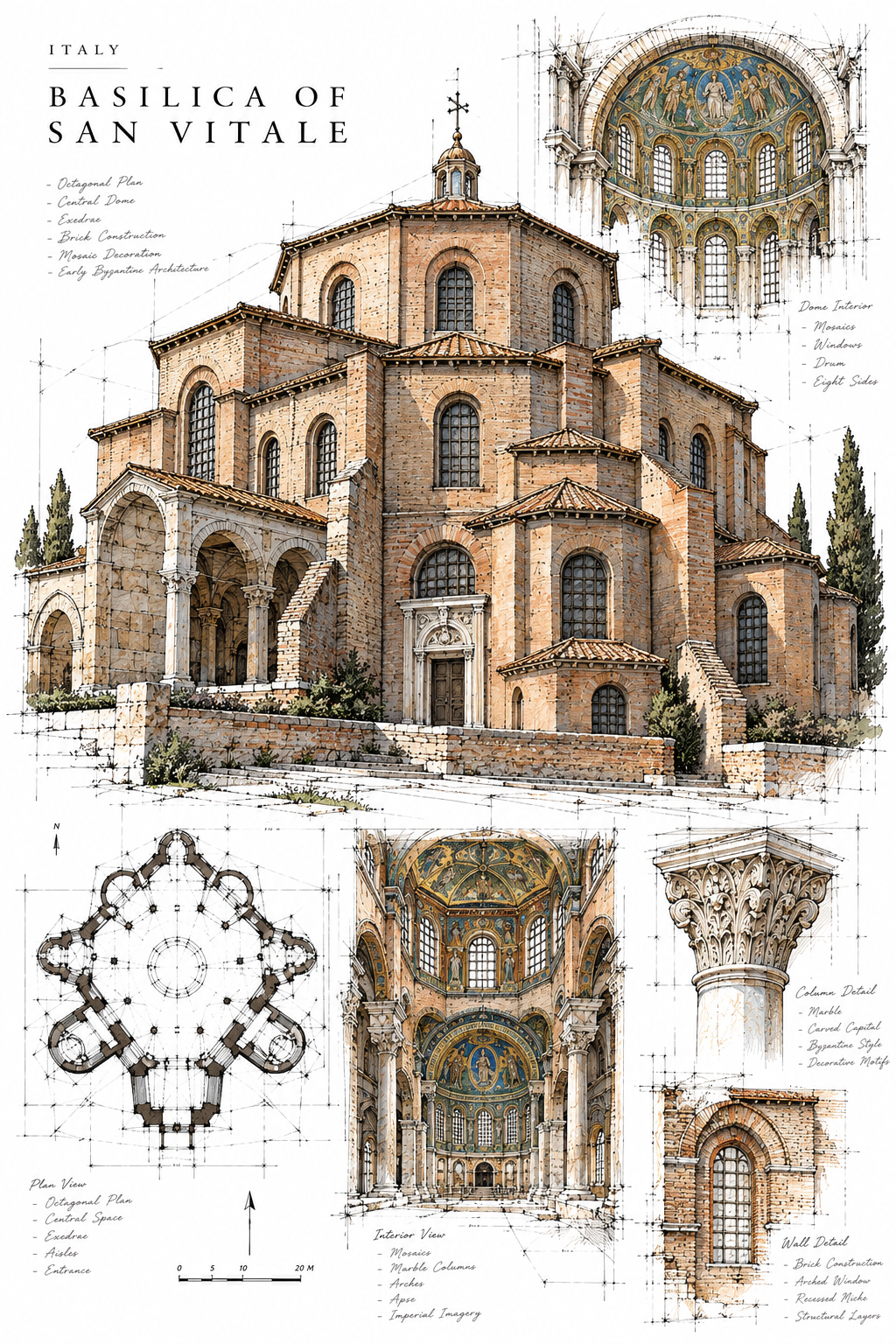
The Byzantine Empire II, Law, Faith, and ReconquestOne Byzantine emperor tried to do it all: rebuild Rome's lost western provinces, rewrite its legal system from scratch, and rebuild its most famous church. Today you weigh the emperor Justinian's reign through sources written by people who both praised and condemned him, and decide for yourself how reliable each account really is.
Header landmark: Basilica of San Vitale — Ravenna (reconquered Italy)
 LESSON 3.4
A New Faith on the Arabian Peninsula
Select for SummaryA New Faith on the Arabian Peninsula
The Rise of Islam I, Arabia Before and During MuhammadThe Arabian Peninsula in the sixth century looked, to the great empires nearby, like an unlikely place for history to change direction. Today you examine the world Muhammad was born into, and how a new monotheistic faith emerged from a region of divided tribes, desert trade routes, and religious diversity.
Header landmark: Al-Masjid an-Nabawi (Prophet's Mosque) — Medina
 LESSON 3.5
From Community to Empire
Select for SummaryFrom Community to Empire
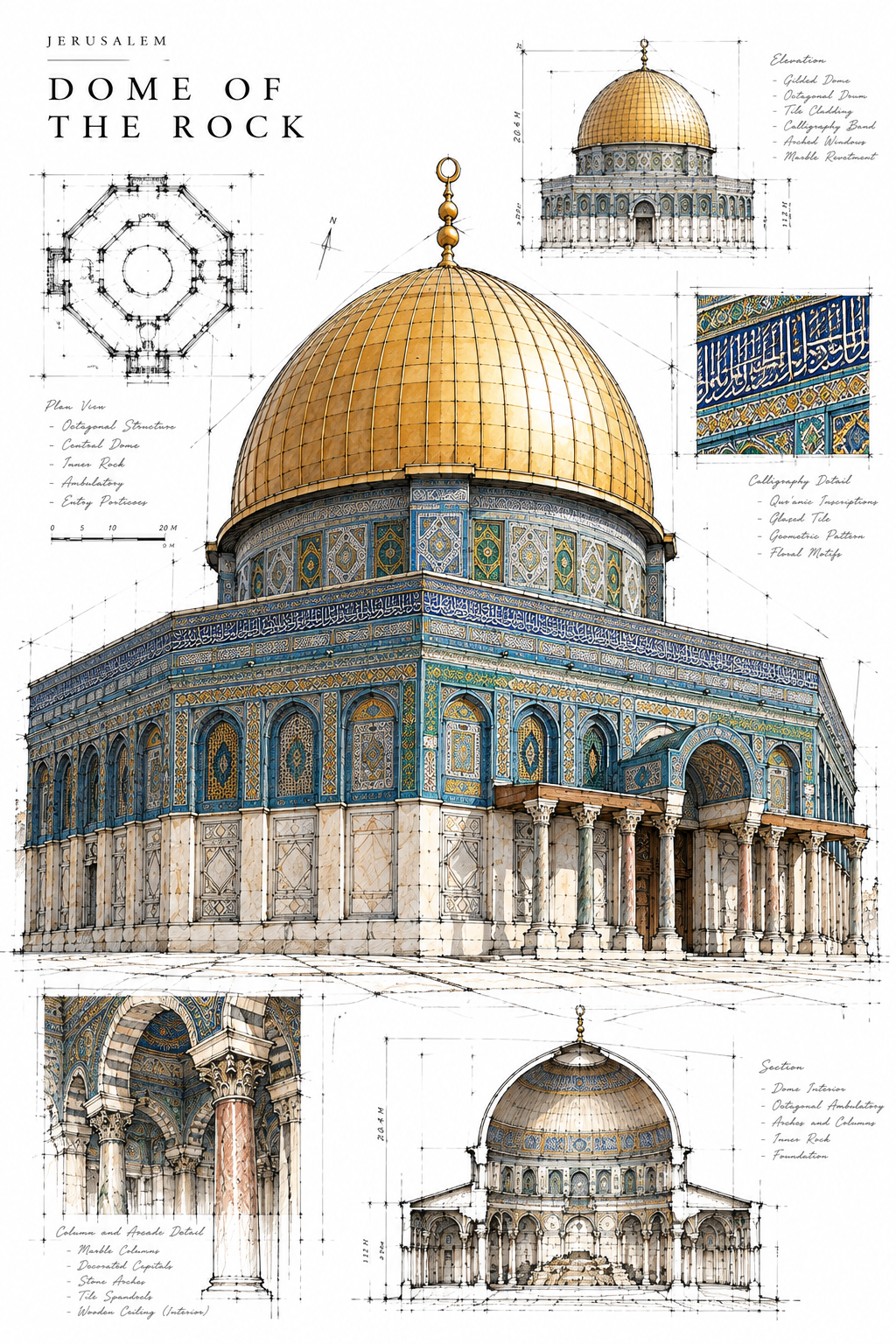
The Rise of Islam II, Conquest and the First CaliphatesWhen Muhammad died in 632 CE, his community faced a question with no obvious answer: who leads a faith after its prophet is gone? Today you trace how that question launched a wave of conquest that, within a century, built one of the largest empires the world had yet seen.
Header landmark: Dome of the Rock — Jerusalem (Umayyad, 691 CE)
 LESSON 3.6
A Cosmopolitan Caliphate
Select for SummaryA Cosmopolitan Caliphate
The Rise of Islam III, Baghdad and IslamizationBaghdad under the Abbasid caliphate became one of the most diverse and intellectually rich cities on Earth, home to Muslims, Christians, and Jews working side by side as scholars, physicians, and administrators. Today you examine how conquest, conversion, and coexistence combined to spread Islam far more slowly, and far more unevenly, than the conquest maps suggest.
Header landmark: Spiral minaret (Malwiya) of the Great Mosque of Samarra — Iraq
 LESSON 3.7
The Seljuk Turks Take the Stage
Select for SummaryThe Seljuk Turks Take the Stage
Middle Asia Empires I, The Seljuk MigrationBy the eleventh century, the once-mighty Abbasid caliphate was fraying at the edges, and a new power was rising among the Turkic peoples of Central Asia. Today you trace how the Seljuk Turks moved from soldiers serving the caliph to rulers who controlled him, and why their expansion sent a desperate call for help all the way to Rome.
Header landmark: Sultan Han caravanserai — Aksaray, Turkey
 LESSON 3.8
The Call to Crusade
Select for SummaryThe Call to Crusade
The Crusades I, Pope Urban II and the First CrusadeA Byzantine emperor asked for mercenaries. A pope gave him an army of armed pilgrims aimed not at defending Byzantine territory, but at conquering Jerusalem. Today you examine the speech that launched the First Crusade, and the sacred city three religions each claimed as their own.
Header landmark: Krak des Chevaliers — Syria
 LESSON 3.9
What the Crusades Left Behind
Select for SummaryWhat the Crusades Left Behind
The Crusades II, Trade, Exchange, and the Later CrusadesThe Crusades were fought over religion, but they reshaped Europe through something far less holy: trade. Today you examine how decades of European soldiers, pilgrims, and merchants moving through the Middle East permanently changed what Europeans ate, wore, bought, and knew about the wider world.
Header landmark: St. Mark's Basilica, Venice (wealth from the crusade trade)
 LESSON 3.10
Three Faiths on One Peninsula
Select for SummaryThree Faiths on One Peninsula
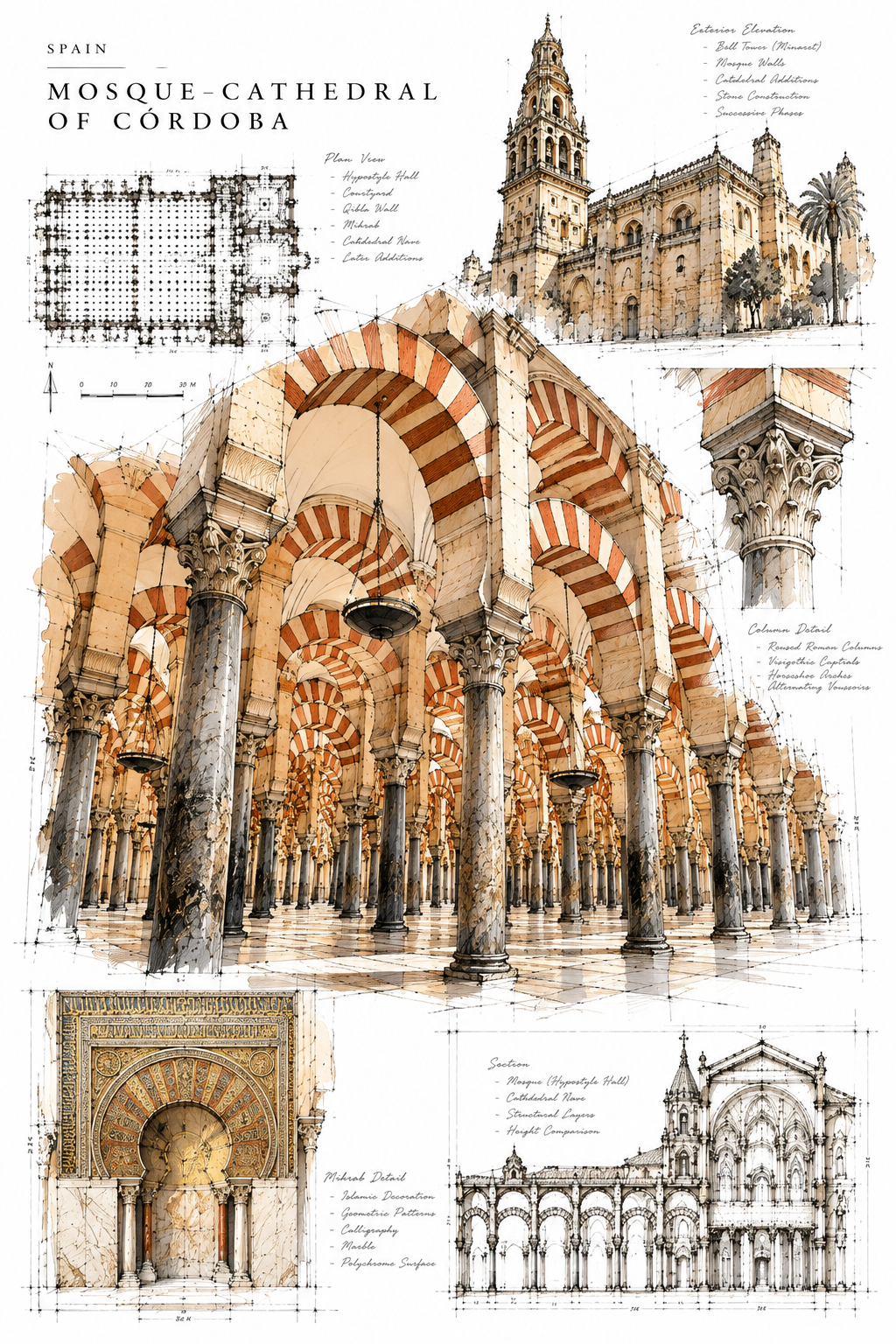
The Crusades III, Al-Andalus and the Long Reconquest of IberiaWhile crusading armies marched toward Jerusalem, a very different and much longer religious conflict was unfolding on the Iberian Peninsula, where Christian kingdoms slowly pushed against centuries of Muslim rule. Today you examine multiple perspectives on what many call the Reconquista, including why some historians now question that very term.
Header landmark: Mosque–Cathedral of Córdoba (Mezquita)
 LESSON 3.11
Gold, Salt, and the Kingdom of Ghana
Select for SummaryGold, Salt, and the Kingdom of Ghana
West African Kingdoms I, The Ghana EmpireLong before Mali or Songhai, one kingdom, south of the Sahara and north of the Niger River, learned to control two of the most valuable commodities in the medieval world: gold and salt. Today you examine how geography, trade, and a simple but ingenious exchange system built West Africa's first great empire.
Header landmark: Ruins of Koumbi Saleh — Mauritania
 LESSON 3.12
Mansa Musa's Golden Pilgrimage
Select for SummaryMansa Musa's Golden Pilgrimage
West African Kingdoms II, Mali and the Wealth of Mansa MusaWhen the ruler of Mali passed through Cairo on his way to Mecca, he reportedly gave away so much gold that the city's economy suffered inflation for more than a decade. Today you examine how the Mali Empire eclipsed Ghana, and how one ruler's pilgrimage turned a West African kingdom into a subject of fascination across the Islamic world and Europe.
Header landmark: Djinguereber Mosque — Timbuktu, Mali
 LESSON 3.13
Songhai Rises From Gao
Select for SummarySonghai Rises From Gao
West African Kingdoms III, The Songhai EmpireThe largest West African empire in history did not rise peacefully. Today you examine how Songhai, centered on the trading city of Gao, grew under a ruthless conqueror and then expanded further still under a reformer who made it the greatest power the region had ever seen.
Header landmark: Tomb of Askia — Gao, Mali
 LESSON 3.14
Beyond the Trading Cities
Select for SummaryBeyond the Trading Cities
West African Kingdoms IV, Sub-Saharan Africa's Wider WorldGold, salt, and famous rulers tell only part of West Africa's story. Today you zoom out from Ghana, Mali, and Songhai's trading cities to examine the natural resources, geography, government structures, religious practices, and pastoral ways of life that shaped Sub-Saharan Africa far beyond any single empire's capital.
Header landmark: Great Zimbabwe — Great Enclosure
 LESSON 3.15
Temujin Becomes Genghis Khan
Select for SummaryTemujin Becomes Genghis Khan
Middle Asia Empires II, The Rise of the MongolsA boy briefly enslaved by a rival clan grew up to unite the fractured tribes of the Mongolian steppe and build the largest contiguous land empire in world history. Today you trace Temujin's transformation into Genghis Khan, and the innovations in loyalty, organization, and warfare that made Mongol conquest possible.
Header landmark: Open Mongolian steppe with gers near Karakorum
 LESSON 3.16
Peace That Moved on Horseback
Select for SummaryPeace That Moved on Horseback
Middle Asia Empires III, The Pax MongolicaA single empire, spanning from China to Eastern Europe, made something possible that had never existed before: a trader could travel the length of the Silk Roads under one set of protections. Today you examine the Pax Mongolica, the Mongol Peace, and what it meant for global exchange when one power controlled the world's longest trade corridor.
Header landmark: Erdene Zuu Monastery on the site of Karakorum — Mongolia
 LESSON 3.17
An Empire Too Large to Hold
Select for SummaryAn Empire Too Large to Hold
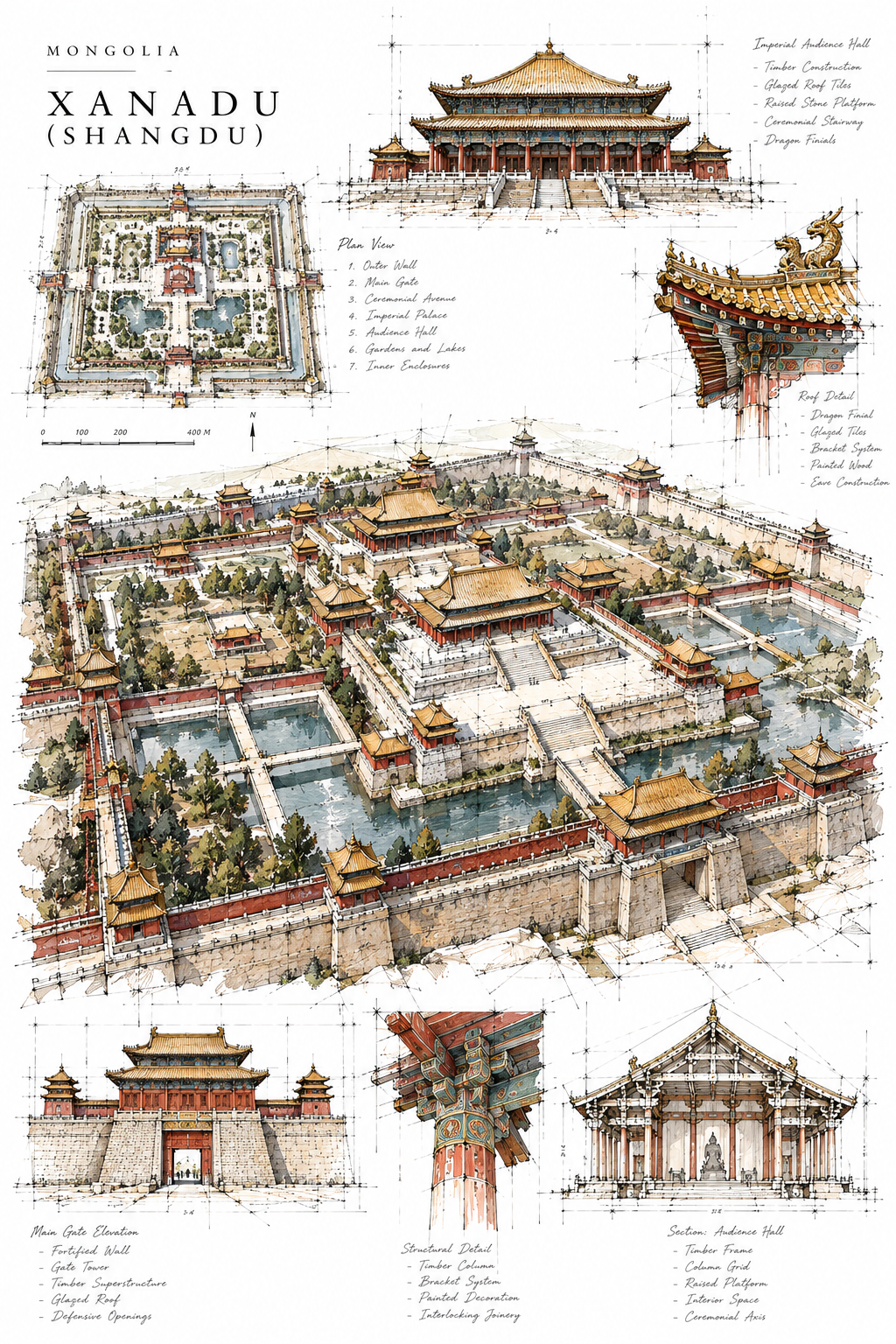
Middle Asia Empires IV, Fragmentation and LegacyNo empire built on conquest and inheritance disputes lasts forever, and the Mongol Empire was no exception. Today you examine how the largest land empire in history split into rival khanates, and why its fall still mattered as much as its rise for the shape of Europe and Asia that followed.
Header landmark: Ruins of Xanadu (Shangdu) — Inner Mongolia
 LESSON 3.18
The Disease That Followed Trade
Select for SummaryThe Disease That Followed Trade
The Calamitous Fourteenth Century, The Black DeathThe same routes that carried silk, gold, and gunpowder technology across Eurasia also carried something far deadlier: a bacterium that would kill roughly a third to half of the population in the regions it reached. Today you examine how the Pax Mongolica's greatest achievement, safe long-distance travel, became the mechanism for the deadliest pandemic in recorded history.
Header landmark: Genoese fortress of Caffa (Feodosia) — Crimea
 LESSON 3.19
A Thousand-Year City Falls
Select for SummaryA Thousand-Year City Falls
Middle Asia Empires V, The Ottoman Empire and 1453For nearly a thousand years, Constantinople had withstood invasion after invasion. In 1453, Ottoman cannons finally broke through what centuries of enemies could not. Today you examine how a small Turkic principality grew into an empire that reshaped the eastern Mediterranean, and what the fall of Constantinople meant for the balance of power across Europe and Asia.
Header landmark: Rumeli Hisarı fortress on the Bosphorus
 LESSON 3.20
What Global Interactions Left Behind
Select for SummaryWhat Global Interactions Left Behind
Unit Synthesis, Answering the Overarching Inquiry QuestionByzantium and Islam. The Crusades. The Mongols. West Africa. The Black Death. Five very different stories, one repeated pattern: contact between distant societies always changed something, for better, for worse, or both. Today you pull together twenty lessons of evidence to answer the question this entire unit has been building toward.
Header landmark: Hagia Sophia with its Ottoman minarets (church to mosque)