

01 - Civilizations
Caesar to Emperor: The Transformation of Rome
In this lesson, we’ll explore one of the most important turning points in world history: the transformation of Rome from a democratic republic into a powerful empire. As Rome grew wealthier and conquered more territory, its republican system struggled to keep up. Power began shifting from elected leaders in the Senate to ambitious generals like Julius Caesar, who used their popularity and military strength to gain control. Caesar’s rise and eventual assassination in 44 BC marked the collapse of the Roman Republic and launched Rome into a period of civil war and uncertainty.
Out of this chaos emerged Octavian, Caesar’s adopted son, who would become Augustus: the first emperor of Rome. Augustus rebuilt the government, expanded the empire, and began a 200-year period of peace and prosperity known as the Pax Romana. During this time, Rome became the dominant power in the ancient world, stretching across Europe, Asia, and Africa. The empire grew stronger through its roads, trade networks, legal systems, and architecture. Many of these advancements still influence our world today. This lesson will help you understand how Rome’s shift from republic to empire shaped the future of government, leadership, and civilization.
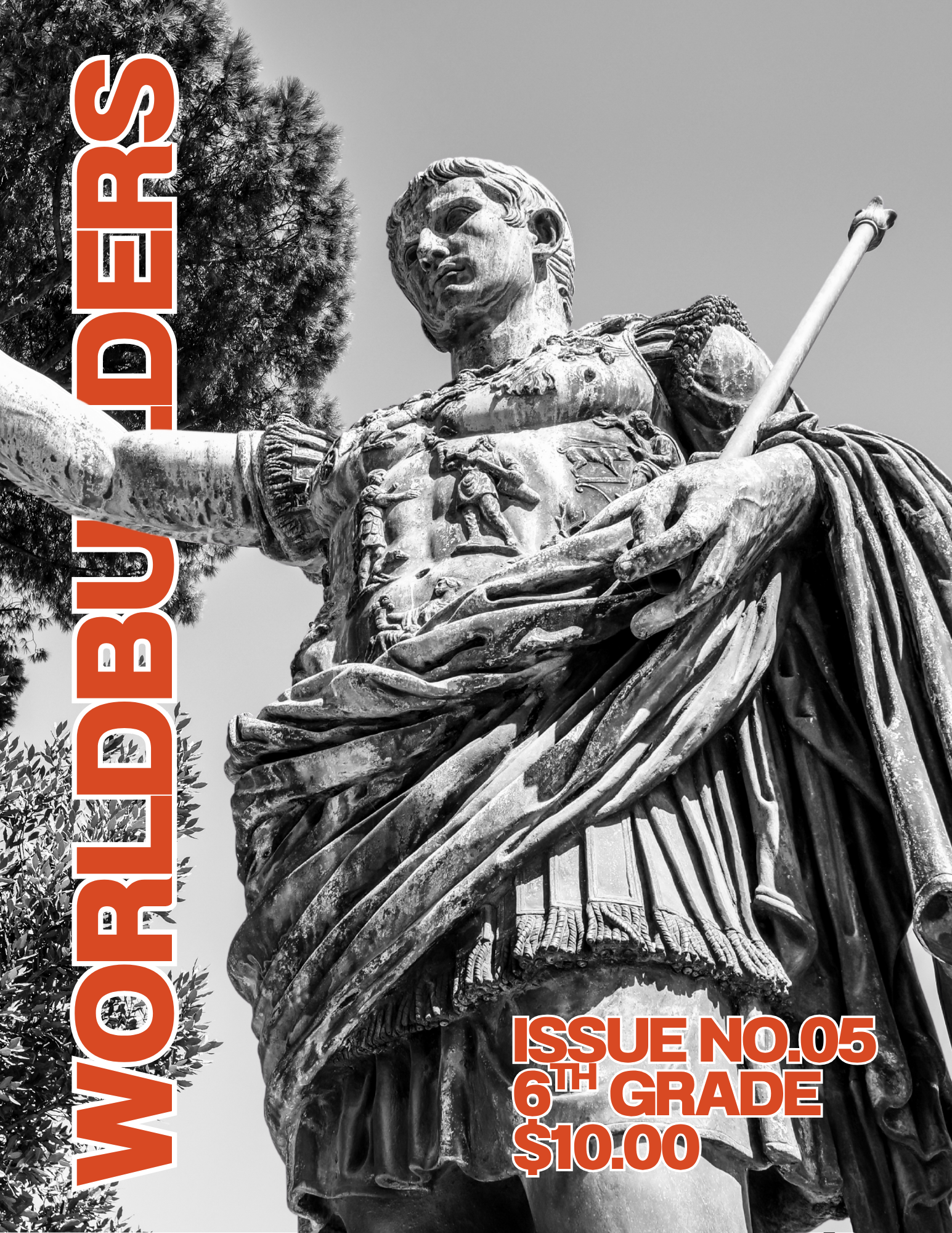
Primary Source Analysis: Power and Leadership in Ancient Rome
As you learned in “The Fall of the Republic and the Rise of Power” and “The First Emperor and the Pax Romana,” Rome transformed from a struggling republic into a powerful empire led by strong, ambitious rulers. Leaders like Julius Caesar and Augustus Caesar didn’t just gain power through military victories, they also shaped how people viewed their leadership through speeches, writings, and public honors.
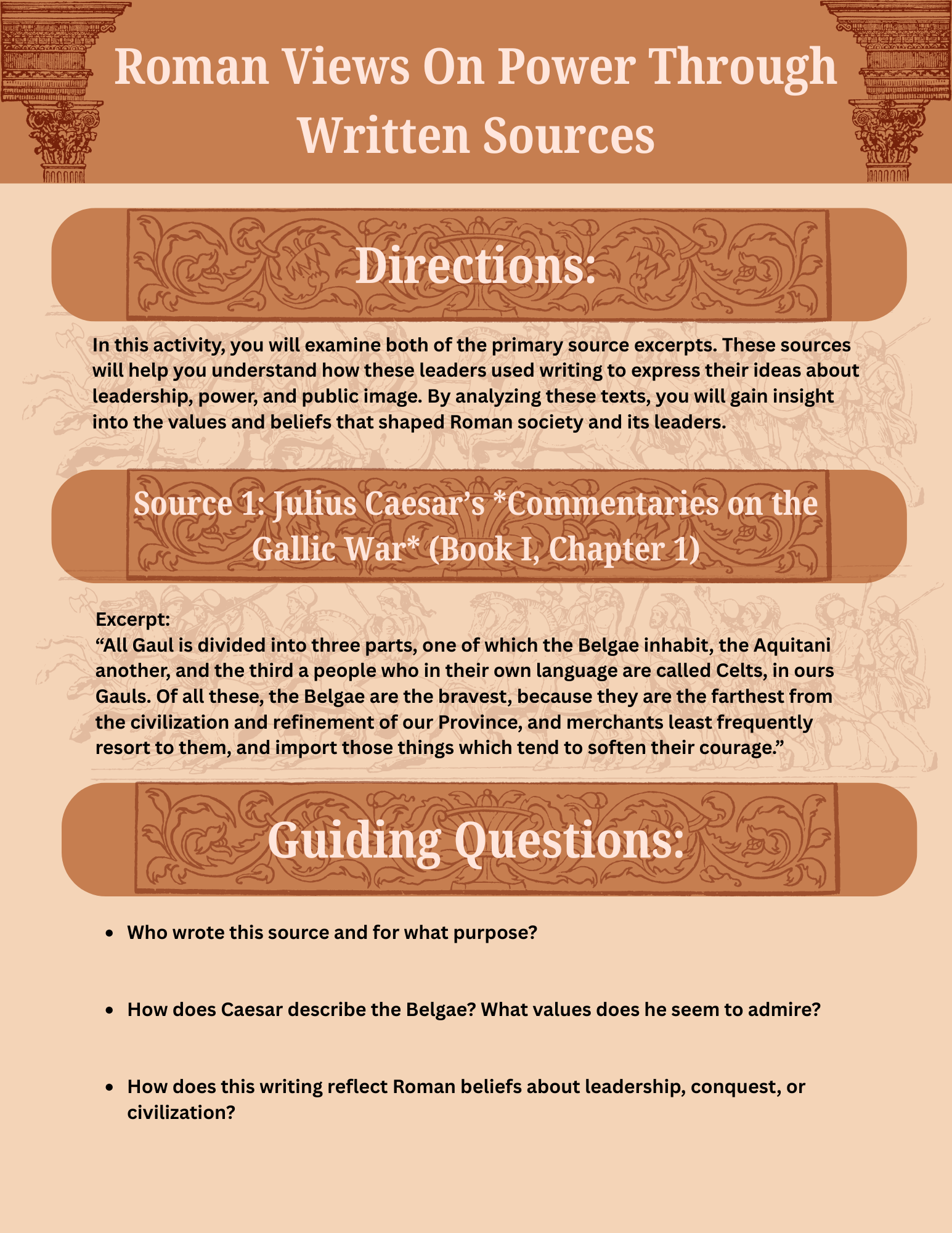
In this DBQ assignment, you will examine two real pieces of writing from these leaders. You’ll explore how Julius Caesar described his own bravery and success, and how Augustus recorded the honors and loyalty he received from Rome. These sources will help you think like a historian: Who created these messages, what do they say, and how did they influence how Romans thought about power and leadership?
Primary Source
Option A: A short excerpt from Caesar’s Commentaries on the Gallic War
Option B: Augustus’s “Res Gestae Divi Augusti” (The Deeds of the Divine Augustus)
-
Ancient Rome DBQ Synthesis
-
Republic: A type of government where people elect leaders to make decisions for them.
Empire: A large group of lands ruled by one leader or government.
Senate: A group of powerful leaders in Ancient Rome who helped make laws and decisions.
Patrician: A wealthy and powerful person from Rome's upper class.
Plebeian: A regular Roman citizen, like a farmer, soldier, or merchant, from the lower class.
Tribune: An elected Roman official who helped protect the rights of plebeians.
Consul: One of two top leaders in the Roman Republic who were elected to run the government and army.
Twelve Tables: The first written laws of Rome that told citizens what was legal and what wasn’t.
Pax Romana: A long time of peace and growth in Rome that lasted about 200 years.
Dictator: A leader with complete control, usually for a short time, often during emergencies.
Aqueduct: A system built by Romans to carry fresh water from faraway places into cities.
Architecture: The design and construction of buildings.
Engineering: The use of science and design to build things like roads, bridges, and buildings.
Colosseum: A huge arena in Rome used for public shows and games.
Latin: The language spoken in Ancient Rome, which shaped many modern languages.
Romance Languages: Languages like Spanish, French, and Italian that come from Latin.
Mare Nostrum: A Latin term meaning “Our Sea,” used by Romans to describe the Mediterranean Sea.
Civil War: A war between groups within the same country.
Legacy: Something important or valuable passed down from the past.
Civic Duty: The idea that people should take part in their government and help their community.