

01 - Civilizations
Geographic Importance and Influence During the Han Dynasty
When we study ancient civilizations like the Han Dynasty, geography helps us understand why the empire became so powerful. In this lesson, you will learn how rivers, mountains, deserts, and trade routes helped shape the daily life, government, and economy of ancient China.
As you read, look for the following key details:
How the Yellow River and Yangtze River supported farming and transportation
How natural barriers like the Himalayan Mountains and Gobi Desert helped protect the Han Empire
How geography made it easier (or harder) for the government to control and manage the empire
How the Silk Road connected China to India, Persia, and Rome, and why this made China stronger
How the Han used their geography to grow cities, trade networks, and expand their influence across Asia
By the end of this lesson, you should be able to explain how geographic features supported the Han Dynasty’s success in trade, culture, and government, and why location mattered so much in ancient China.
Exploring the Geography of the Han Dynasty
Have you ever wondered why some civilizations grow powerful while others struggle? One of the biggest reasons is geography: the land, rivers, mountains, and deserts that shape how people live and connect with the world. In this virtual field trip, you’ll explore six important geographic features that influenced life during the Han Dynasty in ancient China.
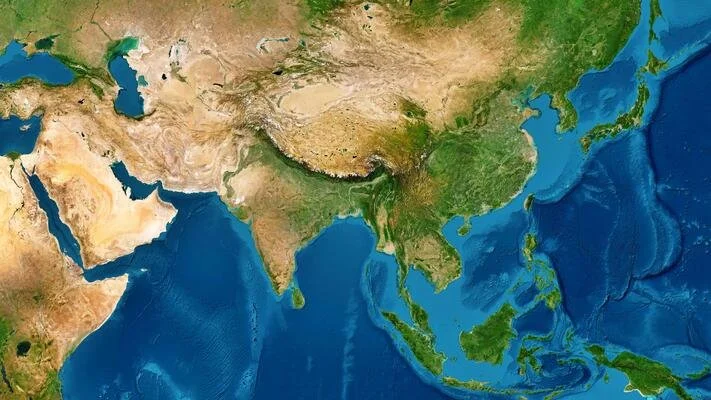
Using Google Maps or Google Earth, you will “visit” places like the Yellow River, the Yangtze River, the Gobi and Taklamakan Deserts, the Himalayan Mountains, and the Silk Road trade route. These natural features played a huge role in helping the Han Dynasty grow strong through farming, trade, protection, and government control.
As you explore each location, you’ll think like a historian and geographer:
How did rivers help people grow food and move supplies?
How did deserts and mountains protect the empire—or create problems?
How did trade routes like the Silk Road help the Han connect with the world?
By the end of this activity, you’ll be able to explain why location mattered so much in ancient China; and how the Han Dynasty used the land around them to shape one of the most powerful empires in history.
Let’s travel back in time - one click at a time!
-
Locations to Visit
Students will search for and "visit" the following six geographic features of ancient China:
Yangtze River
Himalayan Mountains
Gobi Desert
Taklamakan Desert
Silk Road Route (Explore cities like Chang’an/Xi’an and trade paths westward)
Yellow River (Huang He)
Instructions:
Step 1: Open the Map Tool
Open Google Maps or Google Earth Web.
Create a new Google Doc or Slide Presentation titled:
“Han Dynasty Virtual Field Trip - (Your Name)”
Step 2: Visit the Locations
Use the search bar to locate each site listed above. For each one:Zoom in to observe the terrain, water, nearby cities, and natural borders.
Use Street View where available to visualize the landscape.
Optionally, use "Measure Distance" to note how far it is from other features (Example: Yellow River to Taklamakan Desert).
Step 3: Complete the “Geography Impact Table”
Fill in how each feature either helped or challenged these four areas.
Examples to Consider:
Did the rivers help grow crops or move goods?
Did deserts block invaders or slow trade?
Did mountains make travel or control harder?
Did the Silk Road make the empire richer or harder to defend?
Step 4: Write a Summary
After completing all six entries:Write a short reflection titled “Why Geography Mattered to the Han Dynasty.”
Include at least three specific examples from your virtual field trip.
Step 5: Share or Present
Submit your Doc or Slide Presentation
-
World Builders: Issue 08
-
Dynasty - A family that rules a country or empire for a long time.
Emperor - The ruler of an empire; the highest leader in ancient China.
Confucianism - A philosophy that teaches respect, kindness, and doing your duty.
Civil Service Exam - A test people took to get government jobs based on skill, not family.
Mandate of Heaven - The belief that rulers were chosen by Heaven and had to rule fairly.
Silk Road - A group of trade routes that connected China to other parts of the world.
Trade - The exchange of goods, services, or ideas between people or countries.
Porcelain - A fine, white ceramic material used to make dishes and vases.
Buddhism - A religion that teaches people how to reach peace through wisdom and kindness.
Invention - A new tool or idea created to solve a problem or make life easier.
Seismograph - A tool used to detect earthquakes, first invented in ancient China.
Irrigation - A way of bringing water to crops to help them grow, especially during dry times.
Filial Piety - A Confucian idea that means children should respect and care for their parents.
Hierarchy - A system where people are ranked in levels of importance or power.
Artisan - A skilled worker who makes things by hand, like tools, pottery, or clothes.
Warlord - A military leader who controls part of a country, often during a time of weak government.
Rebellion - When a group of people fights against the government because they are unhappy.
Corruption - Dishonest behavior by leaders who use their power to help themselves.
Collapse - The sudden fall or failure of a system, government, or empire.
Legacy - Something important that is passed down from one generation to another.