

01 - Civilizations
The Fall of a Mighty Dynasty
Even the strongest empires can fall and the Han Dynasty was no exception. After over 400 years of success, the Han government began to break down from the inside. Powerful officials became corrupt, land was taken away from small farmers, and unfair treatment caused everyday people to rise up in rebellion. On top of that, natural disasters and deadly diseases added even more pressure.
In this lesson, you’ll learn how all of these problems - greedy leaders, land inequality, rebellion, and outside threats - led to the end of one of China’s greatest dynasties. You’ll also explore what happened after the Han fell and how their ideas continued to shape China for centuries.
As you read, look for the following key details:
How government corruption and selfish leaders weakened the empire
Why land inequality made life harder for poor farmers and helped cause rebellion
What happened during the Yellow Turban Rebellion and why it mattered
How natural disasters and disease made things worse for the Han
What role warlords and military generals played in breaking up the empire
What came after the fall: the beginning of the Three Kingdoms Period
By the end of this lesson, you should be able to explain how the Han Dynasty collapsed and why its fall teaches us important lessons about leadership, fairness, and listening to the needs of the people.
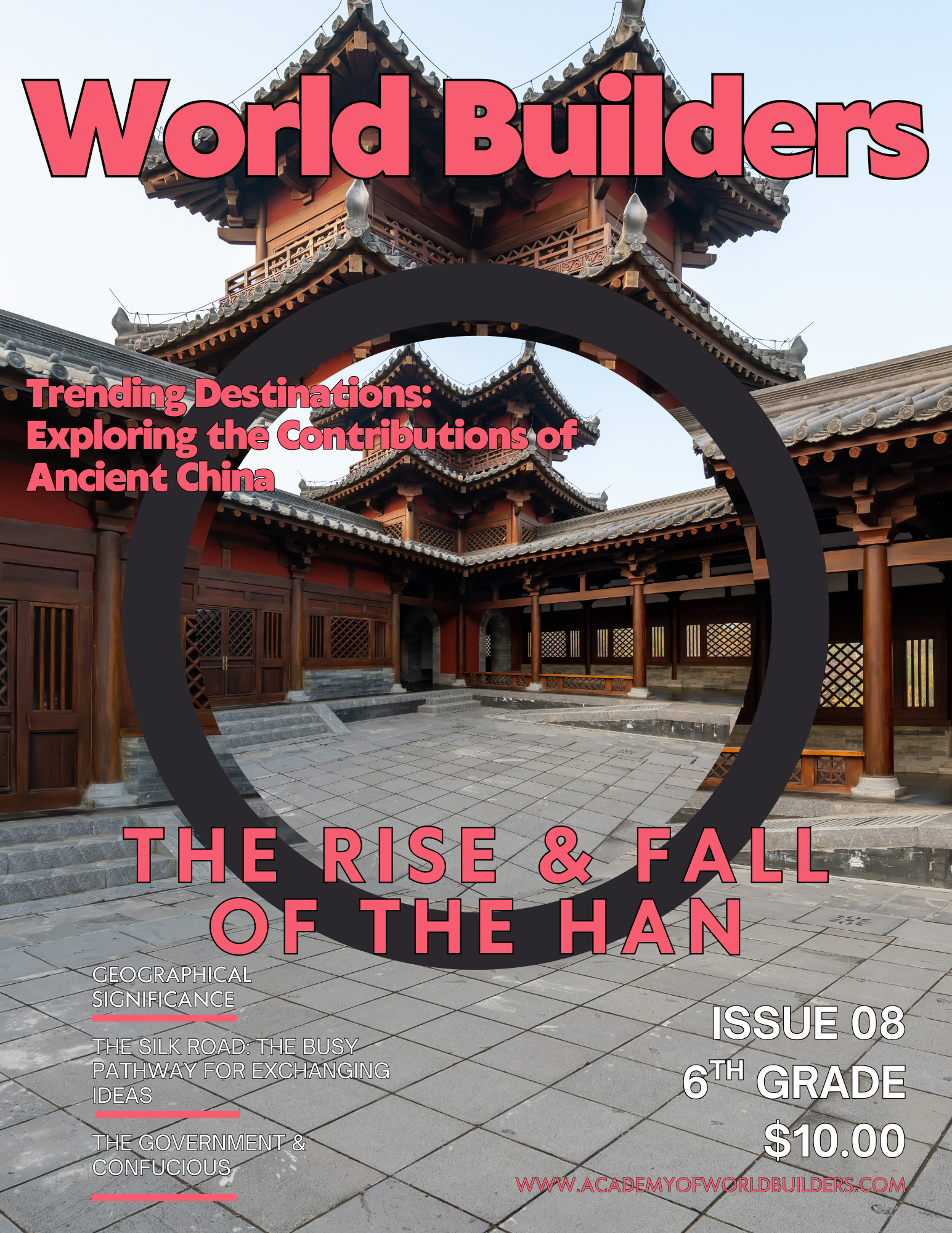
Voices From the Fall of the Han Dynasty
The fall of the Han Dynasty wasn’t just the end of a powerful government, it was a time of great hardship, confusion, and change for the people who lived through it. As the empire weakened due to corruption, land inequality, rebellions, and disease, people from all walks of life were affected. But each person experienced it differently depending on their role in society.
In this activity, you will become one of those people. By writing a first-person journal entry, you will imagine what it was like to live during the final years of the Han Dynasty. You’ll step into the shoes of a peasant, scholar, soldier, landowner, or rebel, and describe what your world felt like as the empire collapsed around you.
-
Step 1: Choose Your Character
Pick or be assigned one of the following roles:
Peasant farmer who is struggling under heavy taxes
Scholar-official watching the government fall apart
Wealthy landowner gaining power as the emperor weakens
Han Dynasty soldier facing constant battles and low pay
Buddhist monk watching new ideas spread as old systems collapse
Yellow Turban rebel hoping for a better and fairer future
Step 2: Plan Your Entry
Before writing, think about:
Where you live (city, countryside, border region, etc.)
What you see and hear around you (rebellions, starvation, soldiers, protests, natural disasters)
How you feel about the fall of the empire (afraid, angry, hopeful, confused?)
What your daily life is like during this time
Step 3: Write Your Journal Entry
Write from the first-person point of view (use “I,” “me,” and “my”).
Use descriptive language to show emotions and events.
Include at least three historical details from what you’ve learned about the fall of the Han Dynasty (Example: the Yellow Turban Rebellion, court corruption, land loss, disease).
Write one full page or three strong paragraphs.
Step 4: Reflect and Share
Pair up or form small groups and read your journal entries aloud.
As a class, discuss:
How did each role experience the fall differently?
What emotions or themes were common across all journals?
What do these journals help us understand about the human side of history?
-
“Today I saw…”
“Everyone in my village is talking about…”
“I fear that…”
“If only the emperor would…”
“My family can no longer…”
“The empire isn’t what it used to be…”
“Each day gets harder as…”
“I remember when life was peaceful, but now…”
“The soldiers passed through our village and…”
“Some say the Han Dynasty has lost the Mandate of Heaven…”
MASTERY OF LESSONS 28-32 EARNS YOU THE FOLLOWING BADGE
-
-
Dynasty - A family that rules a country or empire for a long time.
Emperor - The ruler of an empire; the highest leader in ancient China.
Confucianism - A philosophy that teaches respect, kindness, and doing your duty.
Civil Service Exam - A test people took to get government jobs based on skill, not family.
Mandate of Heaven - The belief that rulers were chosen by Heaven and had to rule fairly.
Silk Road - A group of trade routes that connected China to other parts of the world.
Trade - The exchange of goods, services, or ideas between people or countries.
Porcelain - A fine, white ceramic material used to make dishes and vases.
Buddhism - A religion that teaches people how to reach peace through wisdom and kindness.
Invention - A new tool or idea created to solve a problem or make life easier.
Seismograph - A tool used to detect earthquakes, first invented in ancient China.
Irrigation - A way of bringing water to crops to help them grow, especially during dry times.
Filial Piety - A Confucian idea that means children should respect and care for their parents.
Hierarchy - A system where people are ranked in levels of importance or power.
Artisan - A skilled worker who makes things by hand, like tools, pottery, or clothes.
Warlord - A military leader who controls part of a country, often during a time of weak government.
Rebellion - When a group of people fights against the government because they are unhappy.
Corruption - Dishonest behavior by leaders who use their power to help themselves.
Collapse - The sudden fall or failure of a system, government, or empire.
Legacy - Something important that is passed down from one generation to another.