

Week 1: Mapping Our Watershed
Students investigate why civilizations form near water by comparing ancient River Valley Civilizations with the Georgetown County and Lowcountry watershed. The week blends geography, natural resources, local history, decimal resource ledgers, estimation, place-value reasoning, and evidence-based comparative writing.
Framework Mapping
ADTL Expression
Students begin with a lived design question: why do people build communities where they do? Ancient rivers and local waterways become visible systems that shape survival, settlement, trade, and power.
WICOR Expression
Students read maps and short source excerpts, organize geographic evidence, collaborate through share-outs and partner review, then write comparative summaries using precise spatial vocabulary.
Cognia Expression
The week uses active learning, local relevance, STEM integration, formative exit tickets, and student-produced maps to create visible evidence of growth across all five days.
Vocabulary Explorer
Defining Civilizations and Geographic Anchors
Students examine the five core traits of a civilization: advanced cities, specialized workers, complex institutions, record keeping, and advanced technology. They then connect these traits to physical geography by studying major River Valley Civilizations near the Nile, Tigris and Euphrates, Indus, and Huang He rivers.
The central idea is that early humans did not settle randomly. Water, natural resources, floodplains, flat land, fertile soil, protection, and access to movement routes helped groups shift from survival-based movement to organized communities.
Early humans did not settle in places by accident. For thousands of years, many people lived as nomads who moved from place to place to find food, water, and shelter. Over time, some groups discovered that certain locations made survival easier. One of the most important locations was near a river because rivers provided dependable water and access to nearby resources.
Rivers gave people water for drinking, cooking, washing, farming, and caring for animals. Rivers also helped plants grow. When rivers flooded, they often left behind rich soil called silt. This made the land near rivers useful for farming. Farming allowed people to grow more food and stay in one place for longer periods of time.
As farming improved, communities became larger and more organized. Some people became farmers, while others became builders, toolmakers, traders, priests, government workers, or record keepers. This growth of specialized jobs helped communities develop the traits of a civilization: cities, workers with different roles, institutions, record keeping, and technology.
The earliest river valley civilizations developed in places such as Mesopotamia, Egypt/Kush, India, and China. These societies did not develop in exactly the same way, but they shared an important pattern: people used river systems and natural resources to farm, travel, trade, protect communities, and organize larger societies.
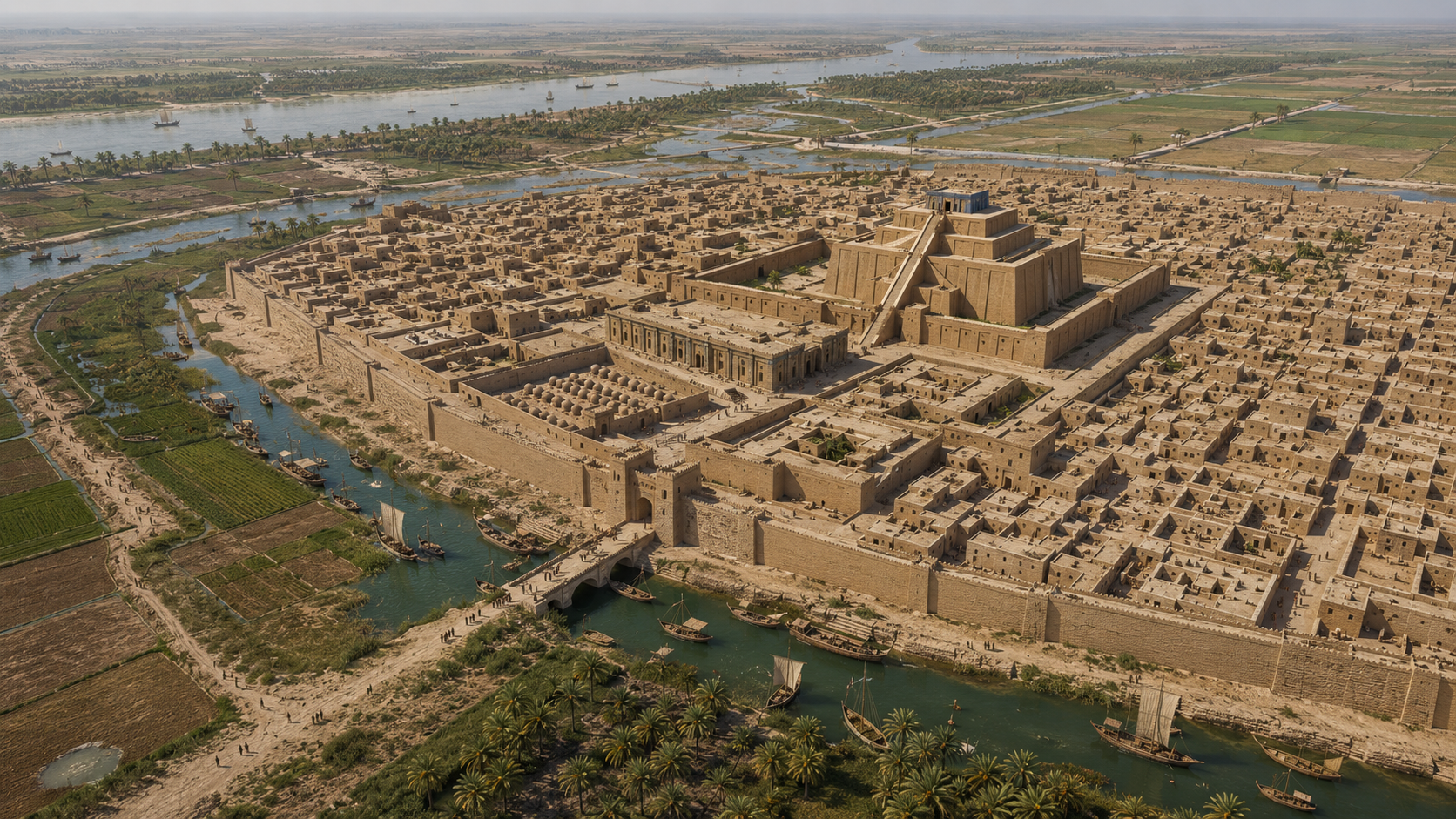
Developed near the Tigris and Euphrates Rivers, where irrigation and public works helped people manage unpredictable flooding.

Developed along the Nile River system, where water, fertile soil, and movement routes supported farming and settlement.

Developed near the Indus River system, where water access helped support settlement, farming, and trade.

Developed near the Huang He River Valley, where fertile land and flood risk shaped early communities.
Students compare the Nile River with the Tigris and Euphrates Rivers. The Nile flooded in a more predictable seasonal cycle, which helped people in Egypt/Kush plan agriculture and connect the river with order and stability.
In Mesopotamia, flooding could be more irregular and destructive. Students analyze how unpredictable geography could shape farming, public works, religious outlooks, and the way communities understood risk.
Early civilizations depended on rivers. Rivers provided fresh water, supported farming, helped people travel, and made trade easier. However, not every river shaped civilization in the same way. Some river systems created a sense of order and predictability, while others created both opportunity and risk.
The Nile River in Egypt and Kush flooded in a more predictable seasonal pattern. Each year, the river rose and spread water over nearby land. When the water went back down, it left behind rich soil that helped farmers grow crops. Because the flooding happened in a regular cycle, people could plan when to plant and harvest.
In Mesopotamia, the Tigris and Euphrates also provided water and fertile soil, but their flooding was less predictable. Floods could arrive suddenly, damage crops, destroy homes, or wash away important land. People responded by building irrigation canals, levees, dikes, and other public works.
The Nile and the Tigris and Euphrates both supported civilization, but they shaped society in different ways. The Nile supported agricultural planning and stability, while Mesopotamia’s rivers required flexible responses to risk. Geography influenced not only where people lived, but also how they worked, worshiped, governed, and understood the world around them.
| Feature | Egypt/Kush | Mesopotamia |
|---|---|---|
| River System | Nile River | Tigris and Euphrates Rivers |
| Flood Pattern | Seasonal and more predictable | More irregular and sometimes destructive |
| Social Impact | Supported planning and stability | Required irrigation, labor organization, and public works |
Local Geography Connection: Lowcountry River Networks
Students connect ancient geography to their own region by examining the Sampit, Black, Waccamaw, and Great Pee Dee river networks. The lesson positions Georgetown County and Winyah Bay as a local case study for movement, food, cultivation, and settlement.
Students compare local waterways with the Nile, Mesopotamia, India’s Indus River system, and China’s Huang He River Valley Civilization. The goal is to see how natural resources, transportation routes, and water access influence where communities grow.
Early civilizations often developed near rivers because people needed water, food, fertile soil, and transportation routes. The Nile River, the Tigris and Euphrates Rivers, the Indus River, and the Huang He River all helped people build larger communities. These river valleys supported farming, fishing, movement, trade, and the growth of cities.
The same type of geographic thinking can help us understand our own region. Georgetown County and the Lowcountry are shaped by water. The Sampit, Black, Waccamaw, and Great Pee Dee Rivers connect with Winyah Bay before reaching the Atlantic Ocean. This created a local river network where people could move, fish, farm, trade, and build communities.
Indigenous communities, including communities connected to the Waccamaw region, used local rivers, marshes, forests, and coastal waters as part of a survival system. Later, European settlers recognized that waterways could support movement, trade, farming, and settlement. African settlers and enslaved Africans also used deep agricultural knowledge to shape rice cultivation in wetland environments.
The local environment shows that geography is not just background information. Rivers and wetlands affected what people ate, how they traveled, where they settled, what they farmed, and what they traded. In both ancient river valleys and the Lowcountry, water helped people survive, build communities, and organize economic systems.
Sampit, Black, Waccamaw, Great Pee Dee
Transport, fishing, crop cultivation, protection, trade access
Project Day 1: River Valley Resource Ledger
Students use decimals to compare food production, fishing, trade value, water travel, and labor in ancient and local river communities. Instead of only describing geography, students organize evidence into a resource ledger.
Students estimate, add, and subtract decimal values through real-world historical geography scenarios. They compare one ancient river valley example with one local Georgetown County or Winyah Bay example to see how waterways supported farming, movement, trade, and settlement.
The project workspace connects decimal reasoning to historical geography. By organizing river resources as quantities and money values, students turn place-based evidence into numerical comparisons.
Historians often compare civilizations by looking at evidence. Evidence can include maps, artifacts, written records, or numerical data. In this project, students use numbers to compare how people used river environments. A decimal ledger helps students organize data about food, labor, trade, transportation, and resource access.
The ancient examples include the Nile River Valley, Mesopotamia, the Indus River region in India, and the Huang He River Valley Civilization in China. Each region used water and natural resources in different ways, but all depended on the environment to support settlement and growth.
The local examples include Winyah Bay, the Waccamaw River, the Great Pee Dee River, the Sampit River, and Georgetown County rice and port communities. These examples help students see that water shaped local history in ways that can be compared to ancient river valley civilizations.
When students estimate, add, and subtract decimal values, they are not just practicing math. They are using math as a tool for historical thinking. The numbers help them make claims about how rivers supported farming, labor, transportation, trade, and permanent settlement.
Decimal Skill
Estimate decimal totals
Add and subtract decimals
Line up decimal points
Use place value to check reasonableness
History Skill
Compare river communities
Analyze natural resources
Connect waterways to trade
Explain resource-use patterns
| Data Set | River Community | Focus |
|---|---|---|
| A | Nile River Valley, Egypt/Kush | Predictable flooding, grain, farming stability, trade |
| B | Mesopotamia | Irrigation, canal labor, grain, risk management |
| C | India and the Indus River region | Water access, settlement, farming, trade movement |
| D | China and the Huang He River Valley Civilization | Fertile soil, flood risk, farming, settlement organization |
| E | Waccamaw and Winyah Bay Indigenous Waterway Communities | Fishing, shellfish, plant resources, water travel |
| F | Georgetown County Rice and Port Communities | Rice cultivation, port trade, river transport, labor |
Project Day 2: Comparative Decimal Analysis of River Communities
Students use the decimal ledgers from Day 4 to make inferences about settlement patterns, resource use, farming, labor, and trade. They identify numerical patterns in their data, such as higher food production, greater trade value, longer water travel distance, or increased labor.
Students add, subtract, estimate, and multiply decimals to compare one ancient river valley civilization with one local Georgetown County waterway community. They explain how similar geographic features produced similar uses of rivers, marshes, floodplains, bays, and trade routes.
The final written task asks students to compare ancient river settlements with Georgetown watershed communities using decimal evidence. Their paragraph must include at least two math terms such as estimate, sum, difference, product, place value, or decimal.
A good historian does more than collect facts. A historian uses evidence to make a claim. In this project, students use decimal calculations as evidence. The numbers help show whether a community depended more on farming, trade, travel, labor, or natural resources.
Ancient river valley civilizations such as Mesopotamia, Egypt/Kush, India, and China used water systems to support larger communities. Local Georgetown watershed communities also depended on rivers and wetlands for food, movement, trade, cultivation, and labor. These patterns allow students to compare distant world civilizations with local history.
A strong comparison paragraph should not only say that both communities used rivers. It should explain how the evidence proves the comparison. For example, a larger food-production total may suggest that river access supported farming. A higher transportation value may suggest that waterways helped people move goods and connect settlements.
By the end of the week, students should understand that geography shapes human choices. Rivers do not automatically create civilizations, but they provide resources and opportunities that people can organize into farms, settlements, trade systems, and communities.
| Category | What Students Compare | Possible Inference |
|---|---|---|
| Food or crop production | grain, fish, shellfish, rice | Waterways supported survival and permanent settlement. |
| Trade value | money or exchange value | Rivers and bays helped move goods. |
| Travel or transport distance | kilometers by water | Water routes connected communities. |
| Labor or public works | hours of work | River environments required planning, irrigation, canals, rice fields, or water control. |
Weekly Product: Mapping Our Watershed Through Decimal Evidence
By the end of the week, students should submit a completed decimal resource ledger and a comparative analysis paragraph. The ledger should show ancient and local resource values, estimates, sums, differences, and at least one decimal multiplication scenario.
The paragraph should explain how ancient river valley civilizations and Lowcountry watershed communities reveal similar human patterns. Strong responses connect civilization, River Valley Civilizations, natural resources, water, fertile land, transportation, labor, trade, and resource access to the development of communities.
Students should accurately reference at least two ancient examples from the Standard 1 vocabulary set, such as Mesopotamia, Egypt/Kush, India, China, or the Huang He River Valley Civilization.